
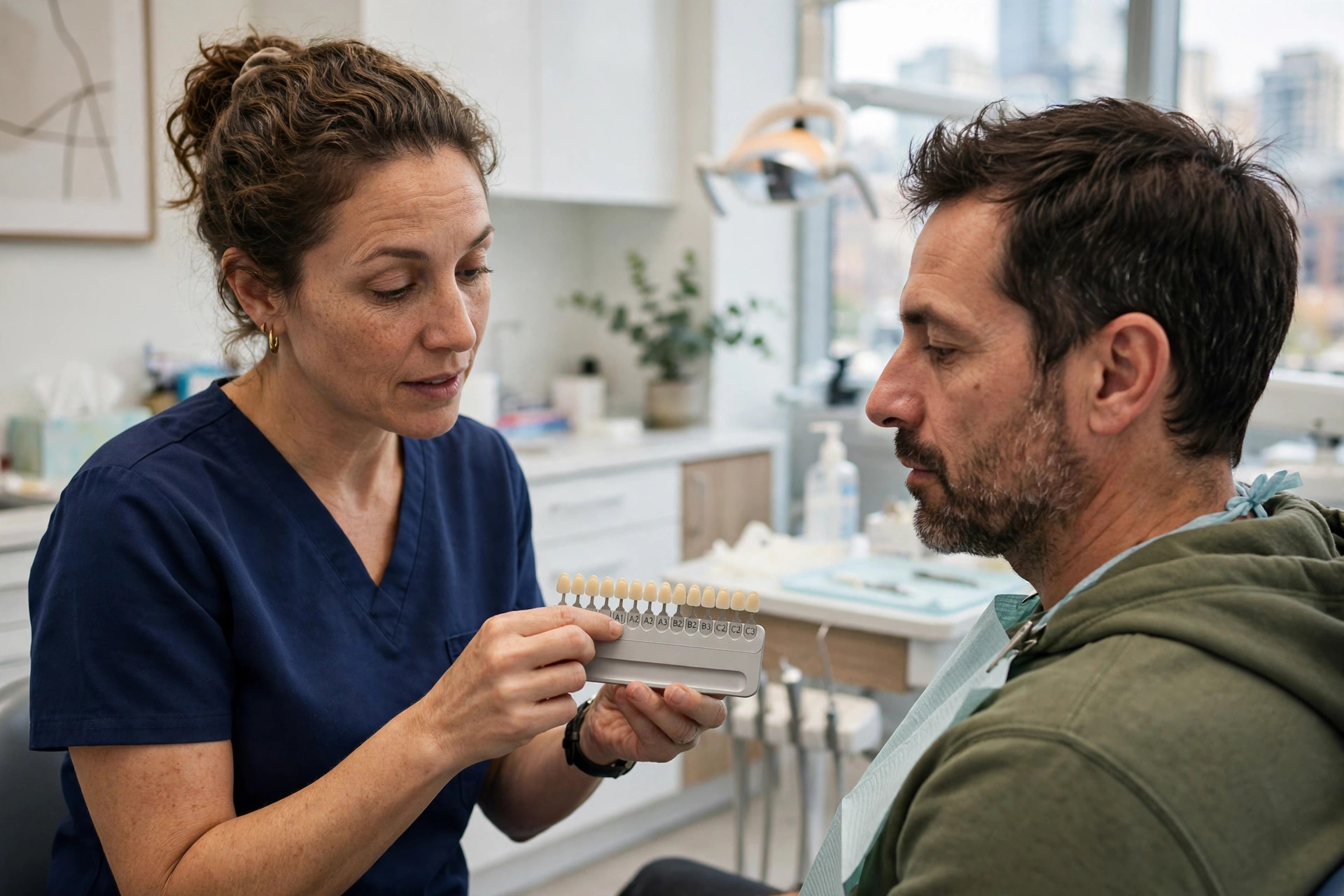
If you are thinking about veneers, you have likely met two main options, and the choice can feel confusing at first.
Both can improve the front of a tooth, yet they differ in material, process, lifespan and care.
This guide compares composite vs porcelain veneers in plain language, without pushing you toward the most expensive choice.
You will learn how each type is made, how it looks over time, and what daily care it needs.
The short answer is that porcelain tends to offer a more refined look and longer service, while composite tends to offer a simpler, more flexible and more easily repaired option.
Your teeth, bite, budget and goals will shape the better fit for you.
A dentist can look at your enamel, gum health and bite before you decide, so this guide is a starting point for a useful conversation, not a substitute for personal advice.
Composite vs Porcelain Veneers: The Direct Answer
Composite vs porcelain veneers differ mainly in material and in how they are placed. Composite is a tooth coloured resin shaped on the tooth, while porcelain is a thin ceramic shell made in a laboratory.
Porcelain often looks more like natural enamel, because it reflects light in a similar way and resists staining well.
Composite can look very natural too, especially when it is polished carefully, yet it may pick up stains more easily over time.
Porcelain veneers typically last longer before they need replacement, while composite veneers often need polishing, repair or replacement sooner. That difference matters when you compare long term value, not just the first visit.
Composite veneers can often be completed in a single visit, which appeals to people who want a faster change.
Porcelain veneers usually need at least two visits, because impressions, laboratory work and a careful fitting visit are involved.
Composite repairs are often simpler, since new resin can be added and polished in the clinic. Porcelain repairs can be more complex, and a damaged shell may need full replacement in some cases.
Neither option is right for every smile, and neither option fixes every dental problem. A dentist will check for decay, gum disease, grinding and bite problems before recommending either type.
What Composite Veneers Are
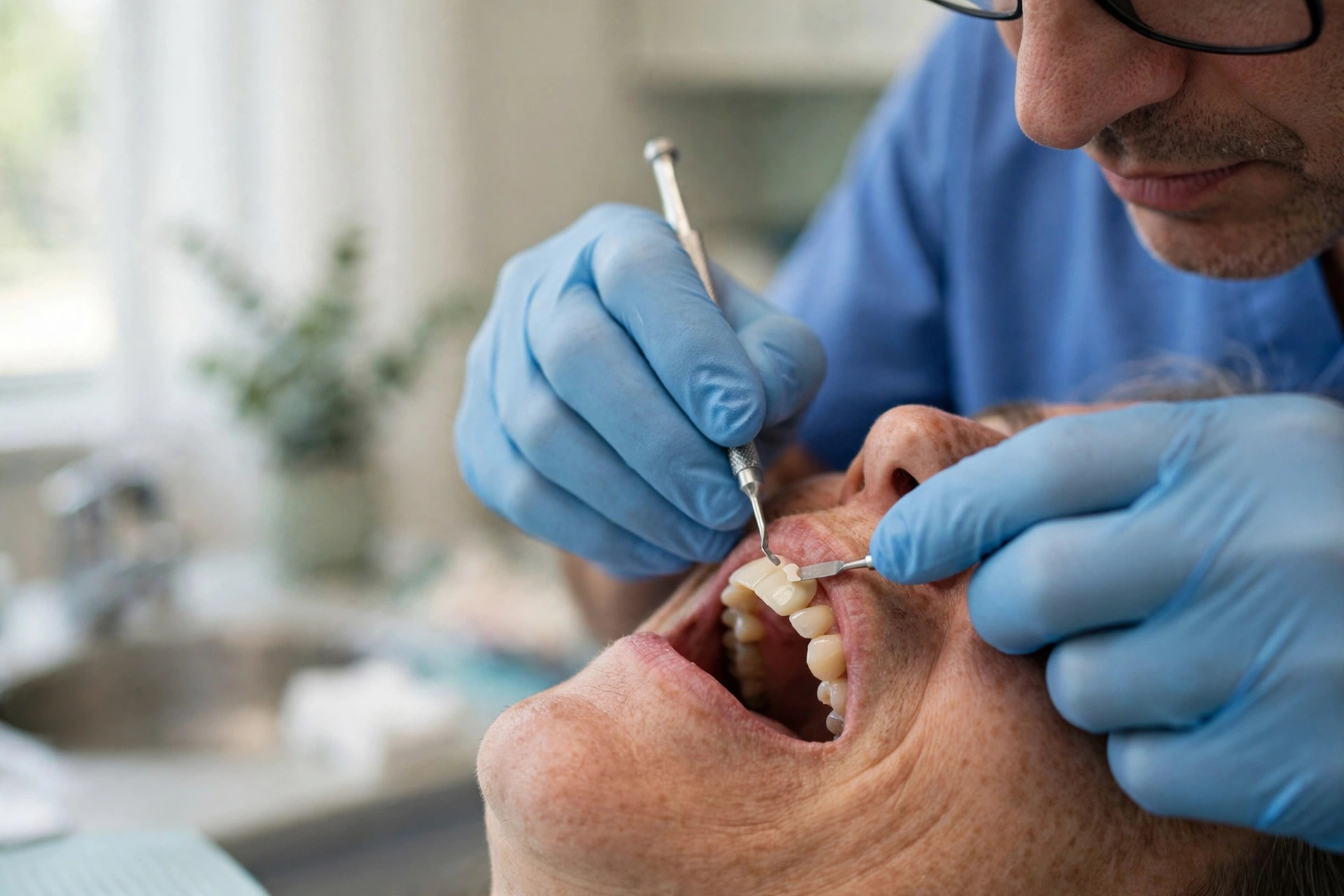
Composite veneers use a tooth coloured resin, similar to the material used for many modern fillings. The dentist applies the resin in layers, shapes it by hand, and hardens each layer with a curing light.
The shade can be matched to your nearby teeth, so the result can blend well in a normal smile. Small chips, gaps, uneven edges and mild discolouration are common reasons people consider this option.
Because the work is done directly in the mouth, the dentist can adjust shape and length during the same visit.
That hands on control can be helpful when only one or two teeth need a subtle change.
Tooth preparation is often minimal with composite, although some shaping may still be needed for a smooth result. Your dentist will explain how much enamel, if any, needs gentle reshaping in your case.
Composite is also used for bonding, which is a related treatment for small repairs. The difference is mainly scale, since a veneer covers more of the front surface than a small bonded repair.
Cost in general terms tends to be lower for composite at the first visit, partly because no laboratory fee is involved.
Long term costs can rise if polishing or replacement is needed more often, so think beyond the first appointment.
What Porcelain Veneers Are
Porcelain veneers are thin shells of dental ceramic, made to fit the front surface of a tooth.
Impressions or digital scans are sent to a laboratory, where a technician crafts each shell to the agreed shape and shade.
The result is often very lifelike, with a translucent quality that resembles natural enamel. Porcelain also tends to resist coffee, tea and red wine stains better than resin, which helps the shade stay stable.
A small amount of enamel is often removed so the shell sits flush and does not look bulky.
The amount varies by case, and your dentist should explain what is planned for each tooth before work starts.
Temporary veneers may protect the teeth while the laboratory work is completed. You can test the general look and feel during that period and raise concerns before the final shells are bonded.
Bonding the final veneers is a careful step, involving cleaning, conditioning and a strong dental adhesive. Once bonded, the shell becomes part of the tooth surface and should feel smooth at the gumline.
Porcelain veneers are a larger commitment than composite in time and in general cost, yet many people value the refined finish and longer service. Your dentist can show examples and discuss realistic results for your smile.
Composite vs Porcelain Veneers at a Glance
The table below summarises the practical differences most people notice. Use it as a starting point, not as a final verdict, because your teeth and bite still shape the best choice.
| Feature | Composite veneers | Porcelain veneers |
|---|---|---|
| Material | Tooth coloured resin | Thin dental ceramic |
| Where made | Shaped in the clinic | Made in a laboratory |
| Usual visits | Often one visit | Usually two or more visits |
| Stain resistance | Moderate, needs polishing | Higher, shade stays stable |
| Typical lifespan | Shorter, repairs common | Longer, replacement less frequent |
| Repair | Often simple, in clinic | May need full replacement |
| General cost | Lower at first visit | Higher at first visit |
Notice that no row makes one option right for every person.
Porcelain leads on finish and stain resistance, while composite leads on speed, flexibility and simpler repairs. Your dentist, not the table, breaks the tie for your mouth.
That balance leads to appearance, which is often the first thing people ask about in detail.
Appearance and Colour Matching
Natural teeth are not flat white, and a good veneer should respect that fact. Healthy enamel has depth, slight translucency at the edge, and small variations in shade across the tooth.
Porcelain handles those details well, because the laboratory can layer ceramic to mimic depth and light. That is one reason porcelain often photographs well and looks natural in bright light.
Composite can also look natural, especially for a single tooth or a small correction. The result depends heavily on the skill of the dentist, the shade chosen, and the final polish.
Shade choice deserves an honest conversation, since a shade that is too bright can look artificial next to your other teeth.
Bring photos of smiles you like, and also photos you dislike, so your dentist understands your taste.
Gum health affects appearance too, because inflamed or uneven gums can make even a well made veneer look less tidy.
A dentist may suggest treating gum concerns before cosmetic work, so the final frame around the teeth looks healthy.
Lighting matters as well, so ask to see the result in natural light and in a mirror at normal speaking distance. Small adjustments at that stage can prevent disappointment after the final bonding.
Durability, Chipping and Wear
Durability is about more than the material, since bite, grinding and daily habits all affect how long a veneer lasts.
Porcelain is strong in normal use, yet it can chip if it meets a hard impact or a very strong bite force.
Composite is slightly softer, which means it may wear, stain or chip sooner under heavy use. The advantage is that a small chip can often be smoothed or repaired without replacing the whole veneer.
Teeth grinding, also called bruxism, deserves special attention before veneers are placed. Grinding can shorten the life of either material, and a dentist may suggest a night guard or bite assessment first.
Hard habits also matter, including biting nails, opening packages with teeth, and chewing ice or very hard foods.
Those habits raise the risk of damage for natural teeth as well as veneers, so changing them protects your whole smile.
Sports contact is another factor, since a blow to the mouth can damage veneers and natural teeth alike. A custom mouth guard can reduce that risk if you play contact sports regularly.
Regular checkups help a dentist spot early wear, rough edges or gum changes around a veneer. Early attention can often prevent a small problem from becoming a larger repair.
General Cost in Words, Not Figures
Cost questions are understandable, yet a single figure would be misleading without knowing how many teeth are involved. The number of veneers, the material, laboratory work and any preparatory treatment all affect the total.
In general terms, composite tends to cost less at the first visit, because the work is completed in the clinic without a laboratory fee.
Porcelain tends to cost more at the first visit, because laboratory craftsmanship and extra visits are included.
Long term value is a different question from first visit cost, since replacement, polishing and repairs add up over time.
Porcelain may offer better long term value for some people, while composite may suit a shorter term goal or a tighter budget.
Insurance coverage for cosmetic veneers is often limited, because many plans focus on health and function rather than appearance. Coverage varies widely, so ask the clinic team to explain your plan in plain terms before you commit.
Payment options and phased treatment can also change what feels manageable, for example treating the most visible teeth first. A clear written estimate helps you compare options without pressure.
If general cost information would help your planning, you can read about porcelain veneers cost in Toronto before your consultation.
That background can help you ask better questions, even though your own estimate will depend on your case.
Treatment Visits and What to Expect
A composite visit usually starts with cleaning, shade selection and gentle preparation of the tooth surface. The dentist then layers resin, shapes it, hardens it, and polishes it until it feels smooth.
You may leave with the final result on the same day, although a short follow up polish can refine the finish.
Sensitivity after the visit is possible for a short time, and your dentist can advise what is typical for you.
A porcelain journey usually starts with a consultation, photographs, and a discussion of shape and shade. Impressions or scans follow, and temporaries may be placed while the laboratory crafts the shells.
The fitting visit checks shape, colour, bite and gumline before final bonding. Small adjustments are easier at that stage, so speak up if anything feels bulky, sharp or uneven.
Bite checks matter after any veneer, because a high spot can cause soreness or extra stress on the new surface. Tell your dentist if your bite feels different when you close, chew or speak.
Good communication during these visits makes a real difference, since cosmetic work is personal and subjective. A dentist who welcomes questions and adjustments is a good sign for this kind of treatment.
Daily Care for Veneers
Daily care for veneers is similar to care for natural teeth, with a few extra cautions. Brush twice a day for two minutes with a soft brush and fluoride toothpaste, and clean between teeth daily.
Avoid scrubbing hard along the gumline, since aggressive brushing can irritate gums and roughen surfaces over time. A gentle technique protects both veneers and the natural teeth beside them.
Staining habits deserve attention, especially for composite veneers, since coffee, tea, red wine and tobacco can dull the shade. Rinsing with water after staining drinks and keeping regular hygiene visits can help.
A professional dental cleaning can remove surface stain and tartar that home care cannot reach. It also gives the dental team a chance to check veneer edges and gum health.
Floss carefully around veneers, using a gentle motion rather than snapping the floss down hard. Your hygienist can show a technique that cleans well without stressing the bonded edge.
If a veneer feels rough, sharp or loose, contact the clinic promptly rather than trying to fix it at home. Early care can often save a veneer that might fail if left alone.
Who Might Suit Each Option
Composite may suit a person who wants a smaller change, a faster result, or a more flexible budget.
It can also suit a younger patient, or a person who wants to test a new smile shape before committing to porcelain.
Porcelain may suit a person who wants a refined finish, stronger stain resistance, or a longer lasting result. It can also suit a person treating several front teeth, where a consistent laboratory finish matters.
People with heavy grinding, a deep bite problem, or significant gum disease may need other treatment first. Veneers do not correct major bite problems, and they do not replace the need for gum treatment.
People with very thin enamel, large existing fillings, or weakened teeth may need a different restoration instead. In those cases, a dentist may discuss crowns and bridges as an alternative approach.
Your smile goals matter too, since some people want a subtle refresh while others want a brighter, more uniform look. Be honest about that goal, because it shapes material, shade and the number of teeth treated.
Age, lifestyle and future plans also play a part, including whether you expect orthodontic work later. A dentist can help you weigh those factors without rushing the decision.
Risks, Limits and Honest Expectations
Veneers can improve appearance, yet they cannot make teeth perfectly uniform in every case. Natural tooth position, gum shape and lip movement all limit what a veneer can achieve on its own.
Sensitivity after preparation or bonding is possible, and it usually settles within a short period. Persistent pain, swelling or a bad taste should prompt a prompt dental check rather than waiting.
Gum irritation can occur if a veneer edge is rough or if plaque builds up around it. Good home care and regular hygiene visits reduce that risk, and early treatment can calm irritation.
A veneer can also debond or chip, especially after trauma or heavy biting forces. Knowing that risk in advance helps you protect the result and seek care quickly if damage occurs.
Porcelain veneers involve some enamel removal in many cases, which is an important commitment to understand. Ask whether the process is reversible in your case, and what future options would look like.
Composite veneers may need more frequent polishing and earlier replacement, which is a trade off for flexibility and simpler repairs. Neither material offers a permanent, maintenance free result, despite how it may be marketed.
Questions to Ask at Your Consultation
A good consultation should leave you with clear answers, not just a treatment plan. Ask how many teeth truly need veneers to reach your goal, and whether a smaller change could work.
Ask what preparation is planned for each tooth, and whether temporaries will be used during porcelain treatment. Ask about shade, shape and how you can preview the result before final bonding.
Ask about grinding, bite and gum health, since those factors affect lifespan and comfort. Ask what happens if a veneer chips, stains or debonds, and what repair or replacement would involve.
Ask about total visits, healing time and what to expect in the first days after treatment. Ask about home care products, including whether whitening toothpaste or abrasive products should be avoided.
Ask for a written estimate that separates material, laboratory and clinical steps, so you can compare fairly. A transparent answer builds trust and helps you decide without pressure.
You may also find it helpful to read about veneers compared with bonding before your visit, since bonding is a related option for smaller repairs. That comparison can clarify whether a full veneer is needed at all.

Frequently Asked Questions
How long do veneers last?
Lifespan varies with material, bite, grinding and home care, so no single figure fits every person. You can learn more about how long veneers last, including the factors that shorten or extend their service.
Is a veneer a permanent choice?
Veneers are a long term commitment rather than a reversible change in many cases, especially porcelain. If you are wondering are veneers permanent, ask your dentist what future replacement would involve for your teeth.
Can veneers fix crooked teeth?
Veneers can mask mild unevenness, small gaps and minor shape problems, yet they do not straighten teeth like orthodontics. Major crowding or bite problems may need orthodontic assessment before cosmetic work is considered.
Do veneers stain?
Porcelain resists staining well, while composite may pick up stains from coffee, tea, wine and tobacco over time. Regular cleaning, gentle home care and stain aware habits help both types keep a fresher shade.
Can I whiten veneers later?
Veneers do not respond to whitening products in the same way natural teeth do, so whitening nearby teeth can create a shade mismatch. If you want professional teeth whitening, discuss timing and shade before veneers are placed.
What if a veneer chips?
Contact your dentist promptly, avoid chewing on that side, and save any fragment if you can do so safely. Small composite chips can often be repaired in clinic, while porcelain damage may need a different plan.
Your Next Step for Composite vs Porcelain Veneers in Downtown Toronto
Choosing between composite vs porcelain veneers is less about picking a winner and more about matching material to your smile, bite, budget and lifestyle.
Porcelain offers a refined finish and stronger stain resistance, while composite offers speed, flexibility and simpler repairs.
Bring your questions, your photos and your honest goals to a consultation, and ask for a clear plan before any enamel is shaped. A dentist can check your gums, bite and tooth health, then help you choose with confidence.
If a checkup and preventive visit is due, that visit is a natural place to start the conversation.
You can also discuss tooth coloured fillings as an alternative for smaller repairs.
Ask about smile makeover in Toronto if you want a broader plan for your smile.
Ask about porcelain veneers in Toronto during your consultation, so the plan is tailored to your teeth.
Book a visit in downtown Toronto, talk through composite vs porcelain veneers with a dentist who knows your mouth, and choose the option you will feel comfortable living with every day.
This article is general information only, not a diagnosis. If you have pain, swelling, fever or a loose or damaged veneer, seek prompt dental care. See a dentist for advice about your own case.


