
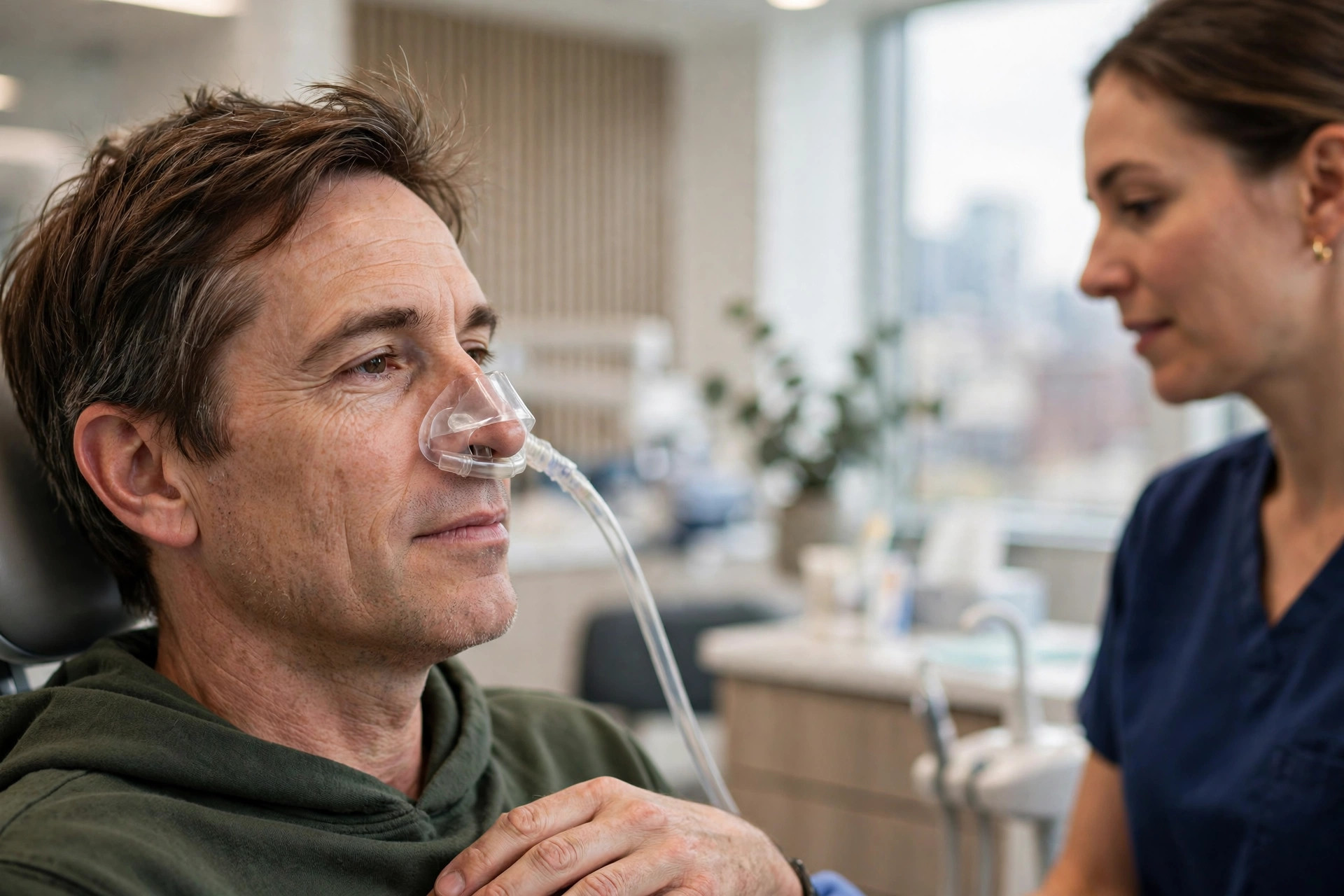
Is sedation dentistry safe? For most healthy adults, dental sedation is considered safe when it is planned carefully, given by a trained team, and matched to your health history.
Sedation helps people who feel anxious about dental care, have a strong gag reflex, need longer treatment, or find it hard to sit still.
It does not put you to sleep in the same way as general anaesthesia in most cases.
Instead, sedation usually helps you feel calm and relaxed, while you remain able to respond. The level can range from very light relaxation to deeper calm, depending on the method chosen.
This guide explains how sedation works, who it suits, what risks exist, and what safety checks should happen. It also helps you ask good questions before you agree to any plan.
Is Sedation Dentistry Safe? The Direct Answer
The short answer is that sedation dentistry is generally safe when it is used appropriately. Safety depends less on the idea of sedation itself, and more on careful screening, correct dosing, and monitoring during treatment.
Your dentist will review your medical history, medicines, allergies, and any past reactions to sedation or anaesthesia. That review helps rule out risks that could make one method unsuitable for you.
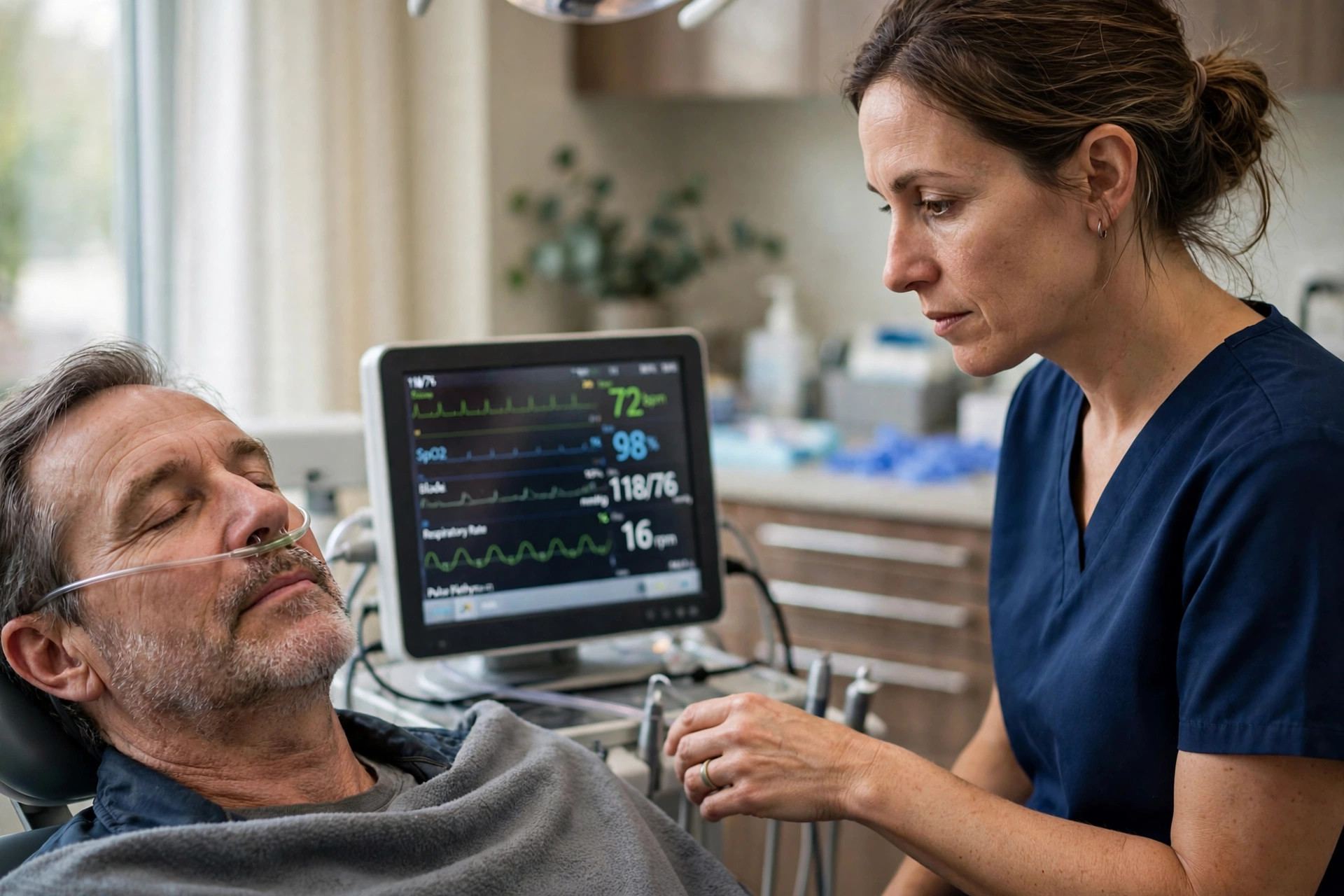
During treatment, the dental team monitors your breathing, heart rate, and oxygen levels as needed for the level of sedation used. Monitoring helps the team respond quickly if anything changes.
After treatment, you will be observed until you are alert enough to leave safely. For deeper sedation, you will need a responsible adult to take you home.
No medical treatment is free of risk, and sedation is no exception. The risks are typically low for healthy patients, but they are real, and they should be discussed openly before treatment.
Understanding those risks, and the steps taken to reduce them, helps you make an informed choice. If any part of the plan feels unclear, ask for more detail before you proceed.
What Sedation Dentistry Means
Sedation dentistry uses medicine to help you feel relaxed during dental treatment. It is not the same as pain relief alone, although local anaesthetic is often used alongside sedation.
Local anaesthetic numbs the area being treated, so you should not feel sharp pain during a procedure. Sedation addresses anxiety, tension, and discomfort, rather than replacing numbing medicine.
Some patients need only light sedation to take the edge off anxiety. Others need a deeper level to get through longer or more complex treatment comfortably.
Sedation does not mean you lose all awareness in most cases. With light and moderate sedation, you can usually hear instructions and respond, even if you feel drowsy or detached.
Deeper sedation brings a stronger effect, and memory of the procedure may be limited. Your dentist will explain the expected level for your treatment, so you know what to expect.
Sedation is a tool, not a requirement. Some patients prefer treatment without sedation, while others find it makes care possible that they would otherwise avoid.
Types of Sedation Used in Dentistry
Different methods suit different needs, and your dentist will suggest an option based on your anxiety level, treatment length, and health history.
Nitrous Oxide, or Laughing Gas
Nitrous oxide is a gas you breathe through a small mask over your nose. It acts quickly, and its effects wear off quickly once the gas stops.
It usually produces light relaxation and a sense of calm, while you remain awake and able to talk. Many patients like that recovery is fast.
Nitrous oxide is often used for shorter visits, or for patients with mild to moderate anxiety. It can also help patients with a sensitive gag reflex.
You can usually drive yourself home after nitrous oxide alone, once the team confirms you feel clear headed. Your dentist will confirm this for your case.
Side effects are typically mild, such as brief nausea or light headedness. The team can adjust the gas level during treatment if needed.
Oral Sedation
Oral sedation involves taking a prescribed pill before your appointment, usually an anti anxiety medicine. The dose is chosen based on your needs and health history.
Oral sedation tends to produce a deeper calm than nitrous oxide alone. You may feel drowsy, and you may remember little of the visit afterward.
Because the effect lasts longer, you will need someone to drive you to and from the appointment. You should also rest for the rest of the day.
Timing matters with oral sedation, since the pill needs time to take effect. Your dentist will give clear instructions about when to take it and what to avoid beforehand.
Some patients combine oral sedation with nitrous oxide, when that combination is judged suitable. Your dentist will explain whether that applies to you.
IV Sedation
IV sedation is given through a vein, and it allows the team to adjust the level more precisely during treatment. It usually produces deeper relaxation than oral sedation.
You remain able to breathe on your own, but you may feel very drowsy and remember little afterward. The team monitors you closely throughout.
IV sedation is often used for longer procedures, complex treatment, or patients with strong dental anxiety. It requires more monitoring and a longer recovery period.
You will need a responsible adult to escort you home, and you should not drive, work, or make major decisions for the rest of the day. Your dentist will explain the full recovery plan.
IV sedation is not the same as general anaesthesia, where you are fully unconscious and need breathing support. Your dentist will clarify which level is planned for you.
General Anaesthesia
General anaesthesia puts you fully to sleep, and it is used only in certain settings, often a hospital or specialist clinic. It is less common in a general dental office.
It may be considered for very complex treatment, for patients who cannot cooperate for medical reasons, or for certain surgical cases. It carries higher risks and needs specialist care.
Your dentist will discuss referral options if general anaesthesia seems more suitable than office based sedation. That discussion should include risks, costs in general terms, and recovery.
Most routine dental sedation does not involve general anaesthesia. If it is suggested, ask why, and what alternatives were considered.
Who Sedation Can Help
Sedation can help a wide range of patients, not only people with severe fear. It is worth discussing if anxiety has kept you from regular dental care.
Patients with dental anxiety often delay checkups, which can allow small problems to grow. Sedation can break that cycle by making the first visit back feel manageable.
People with a strong gag reflex may also benefit, because sedation can reduce gagging during impressions, X-rays, or treatment near the back of the mouth.
Patients who need long or complex treatment, such as multiple fillings or implant work, may find sedation helps them stay comfortable for a longer visit.
Children, patients with special needs, and patients who struggle to sit still may also be considered, with methods chosen carefully for age and health. Parents should ask about paediatric experience where relevant.
Sedation for dental anxiety is a common reason patients seek this option, and it is nothing to feel embarrassed about. Many adults share that fear, often after a difficult past experience.
If anxiety is your main concern, tell your dentist honestly. That honesty helps the team choose the gentlest plan that still lets you receive the care you need.
Who Should Be Careful With Sedation
Sedation is not suitable for every patient, and careful screening protects those who need extra caution. Your health history guides that decision.
Patients with certain breathing conditions, sleep apnoea, heart conditions, or liver problems may need extra assessment. Those conditions can affect how sedation medicines are processed.
Pregnant patients, patients who are breastfeeding, and patients taking certain medicines should discuss sedation carefully with their dentist and physician. Timing and medicine choice may need adjustment.
Patients who use alcohol, recreational drugs, or sedative medicines should disclose that use, because interactions can change sedation effects. Honest disclosure helps keep dosing safe.
Older adults and patients with complex medical histories may need lower doses or a different method. Age alone does not rule out sedation, but it shapes the plan.
If you have had a bad reaction to sedation or anaesthesia before, tell your dentist in detail. That history can guide a safer choice, or prompt referral to a specialist.
A dentist who asks many health questions before suggesting sedation is doing the right thing. That screening is a safety step, not an obstacle.
Sedation Dentistry Risks: What Can Happen
Sedation dentistry risks are typically low, but they should be understood before you consent. Common side effects tend to be mild and short lived.
Drowsiness, grogginess, dry mouth, and mild nausea can occur after sedation. Headache or brief confusion can also happen, especially after deeper sedation.
Some patients feel unsteady on their feet for a few hours. That is why an escort home and rest are important after moderate or deep sedation.
Less common risks include breathing slowing, low blood pressure, or an allergic reaction to a medicine. These risks are why monitoring and trained staff matter.
Very rare risks include serious breathing problems or a reaction that needs emergency care. A prepared clinic should have oxygen, reversal medicines where appropriate, and emergency training.
Risk rises when health history is incomplete, when fasting instructions are ignored, or when a patient drives too soon. Following instructions closely reduces avoidable risk.
Your dentist should explain risks in terms that relate to your health, not only in general. Ask what would happen if a problem arose, and how the team would respond.
Safety Checks Before, During, and After Sedation
Safety in sedation dentistry comes from a series of checks, not from one single step. Knowing those checks can help you judge whether a clinic is prepared.
Before treatment, expect a full medical review, including medicines, allergies, and past sedation experiences. Blood pressure and other baseline checks may be taken.
Fasting instructions matter for deeper sedation, because food in the stomach raises the risk of nausea and breathing problems. Follow the timing your dentist gives you.
During treatment, the team should monitor vital signs appropriate to the sedation level. That may include oxygen levels, heart rate, and breathing.
The team should also confirm that emergency equipment is available, and that staff are trained to use it. Do not hesitate to ask about training and monitoring.
After treatment, you should be observed until you are stable and alert enough to leave. Written aftercare instructions should cover rest, eating, medicines, and warning signs.
For oral and IV sedation, a responsible adult should stay with you for the first hours at home. That person can help if dizziness or nausea occurs.
If you feel unwell after leaving, contact the clinic promptly. Persistent vomiting, trouble breathing, chest pain, or confusion need urgent care.
Safe Sedation: What to Ask Before You Agree
Asking good questions helps you compare options and feel confident in your choice. Bring your questions in writing if that helps.
Ask which sedation method is recommended for you, and why that method was chosen over others. Ask what level of awareness to expect during treatment.
Ask about the training and experience of the team providing sedation. Ask who will monitor you, and what monitoring will be used during your visit.
Ask about fasting, medicines to pause or continue, and whether you need an escort home. Ask how long recovery usually takes for your method.
Ask about costs in general terms, and whether sedation is covered by your dental plan. Coverage varies, so confirm before the visit if cost is a concern.
Ask what to do if you feel unwell afterward, and which symptoms should prompt urgent care. Clear aftercare advice is part of safe sedation.
You can read about sedation for dental anxiety and nitrous oxide vs oral sedation to compare methods before your visit. Those guides explain differences in plain language.
If any answer feels rushed or vague, it is reasonable to seek a second opinion. Safe sedation should feel transparent, not pressured.
Sedation and Common Dental Treatments
Sedation can be used with many treatments, but it is not needed for every visit. A routine checkup and cleaning often needs no sedation at all. A dental cleaning rarely needs sedation, and many patients manage it comfortably without medicine.
For severe symptoms after sedation, seek emergency dental care without delay.
Fillings, root canal treatment, extractions, and implant work are common cases where sedation is discussed, especially for anxious patients or longer visits.
For a checkup and preventive visit, sedation is rarely required, unless anxiety is severe. Your dentist can discuss gradual steps to rebuild comfort with routine care.
For tooth extractions or root canal treatment, local anaesthetic still numbs the area, while sedation helps with anxiety and comfort. The two work together.
For patients who need a crown, bridge, or denture work over several visits, sedation may make longer appointments easier. Your dentist will balance comfort with safety.
Sedation does not change the dental treatment itself, only how you experience it. The clinical steps, such as cleaning, filling, or shaping a tooth, remain the same.
If you are considering sedation for a specific procedure, ask how long the visit will last, and whether sedation is truly needed for that treatment.
Myths About Sedation Dentistry
Several myths can make sedation seem scarier, or safer, than it really is. Clear facts help you decide with confidence.
One myth is that sedation means being fully asleep in every case. In most dental cases, you remain partly aware, especially with nitrous oxide or oral sedation.
Another myth is that sedation removes all risk from dental treatment. Sedation reduces anxiety, but it does not remove clinical risks of the procedure itself.
A third myth is that sedation is only for people with extreme fear. Many patients use light sedation for gagging, long visits, or simply to feel calmer.
A fourth myth is that you can drive home after any sedation. That is not true for oral or IV sedation, where an escort and rest are essential.
A fifth myth is that sedation lets the dentist skip numbing medicine. Local anaesthetic is still used for most invasive treatment, to control pain at the site.
Understanding these myths helps you ask better questions. It also helps you avoid choosing sedation for the wrong reason, or avoiding it when it could help.
Preparing for a Sedation Appointment
Good preparation makes sedation safer and smoother, and it reduces surprises on the day. Follow your dentist's instructions closely.
Arrange an escort if your method requires one, and confirm that person can stay with you afterward. Do not plan to drive, work, or care for others alone that day.
Wear comfortable clothing, and avoid heavy meals if fasting is advised. Tell the team if you ate or drank against instructions, so they can judge safety.
Bring a list of medicines, supplements, and allergies, and mention any recent illness or change in health. Small changes can affect sedation planning.
Avoid alcohol and recreational drugs before sedation, unless your dentist advises otherwise. Those substances can interact with sedation medicines in unpredictable ways.
After the visit, rest at home, drink water when advised, and eat light foods as tolerated. Follow instructions about medicines and when to resume normal activities.
If you have questions after the visit, contact the clinic rather than guessing. Post visit advice is part of the care, not an extra favour.

Frequently Asked Questions
Is sedation dentistry safe for healthy adults?
For most healthy adults, sedation is considered safe when screening, dosing, and monitoring are done carefully. Risks exist, but they are typically low, and your dentist should discuss them in relation to your health.
Will I be asleep during sedation dentistry?
Usually not fully asleep, except with general anaesthesia. With nitrous oxide or oral sedation, you remain partly aware and able to respond, though you may feel drowsy and remember little afterward.
How long does sedation wear off?
Nitrous oxide wears off quickly, often within minutes after the gas stops. Oral and IV sedation last longer, often for several hours, so rest and an escort home are important.
Can I drive after sedation dentistry?
You can usually drive after nitrous oxide alone, once you feel clear headed and the team agrees. You should not drive after oral or IV sedation for the rest of the day.
Is sedation safe for children?
Sedation can be safe for children when it is given by a team experienced in paediatric care, with doses based on age and weight. Parents should ask about experience, monitoring, and aftercare before agreeing.
What should I tell my dentist before sedation?
Tell your dentist about medical conditions, medicines, allergies, past sedation reactions, alcohol use, and pregnancy or breastfeeding. Complete information helps the team choose the safest method and dose for you.
Book Safe Sedation Dentistry in Downtown Toronto
Is sedation dentistry safe? For most patients, the answer is yes, when it is planned with care, given by a trained team, and matched to your health and treatment needs.
Sedation can turn a visit you have been avoiding into a calm, manageable experience. It can help with anxiety, gagging, and longer treatments, without requiring general anaesthesia in most cases.
The safest step is a conversation. Share your fears, your health history, and your past experiences, and let the dentist explain which method, if any, suits you.
Safe sedation starts with honest screening, clear instructions, and close monitoring, and it continues with rest and aftercare at home. Those steps together keep risk low.
If you are in downtown Toronto and dental anxiety has kept you away, consider booking a consultation. Ask about sedation dentistry, discuss your options, and choose a plan that feels right for you.
You can contact us to discuss sedation options and ask questions before booking.
This article is general information only, not a diagnosis. If you have pain, swelling, fever, trouble breathing, chest pain, or confusion after sedation, seek prompt or urgent care. See a dentist for advice about your own case.


