
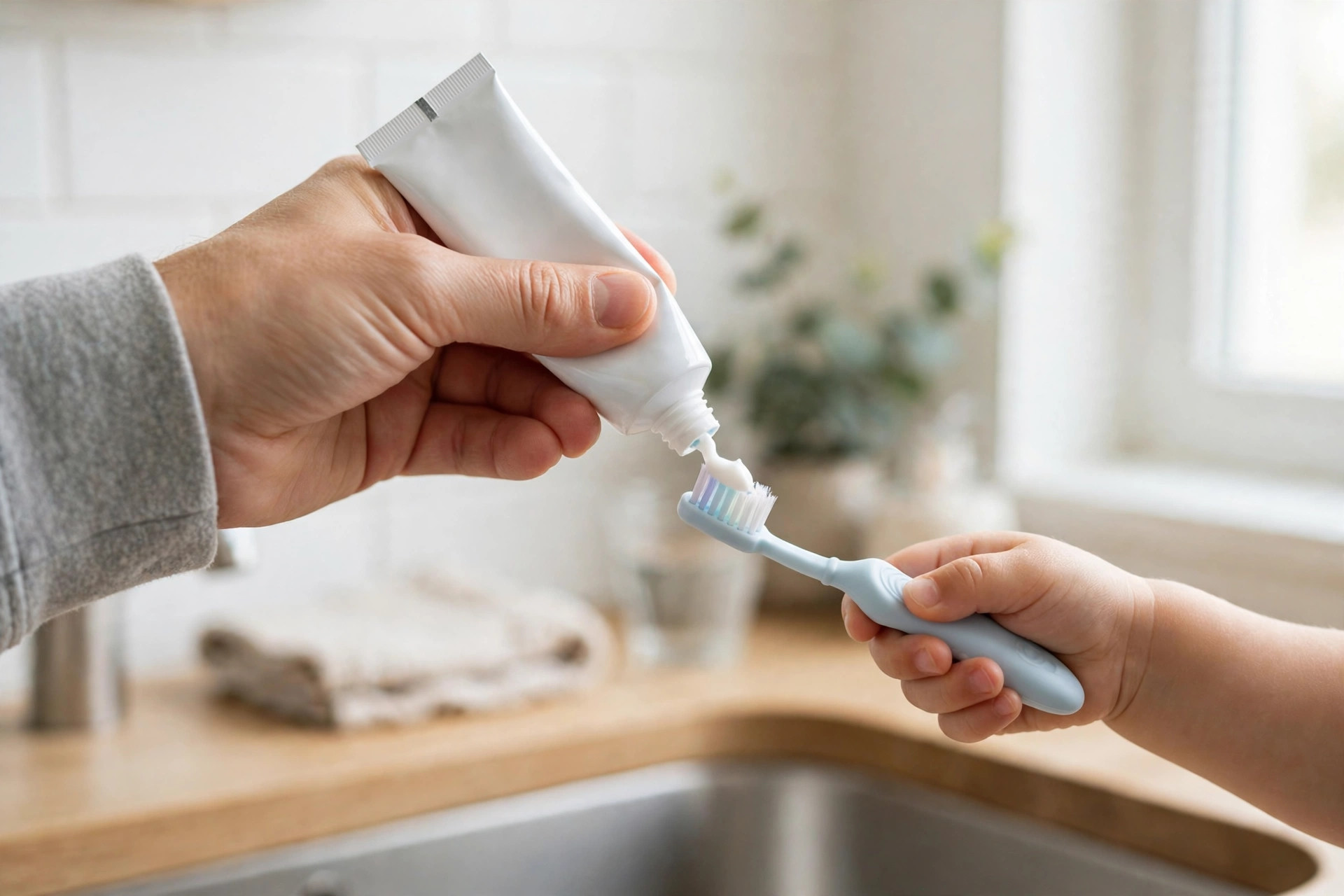
When should kids use toothpaste? The short answer is that fluoride toothpaste can start as soon as the first tooth appears. The amount matters more than the exact brand, and parents should supervise brushing.
A tiny smear is enough for very young children. As children grow, the amount increases gradually. By school age, most children use a pea sized amount under supervision.
This guide explains toothpaste for toddlers, fluoride toothpaste age guidance, and safe brushing routines. It also covers what to do if a child swallows toothpaste.
Toothpaste Starts With the First Tooth
Toothpaste use does not wait until a child can spit reliably. Fluoride helps protect newly erupted enamel from acid attacks. Starting early, with a tiny amount, supports that protection.
Before teeth erupt, wipe gums with a clean damp cloth. Once a tooth breaks through the gum, switch to gentle brushing. Use a soft, small headed brush made for infants.
Parents should do the brushing for babies and toddlers. Young children lack the coordination for thorough cleaning. Supervision also controls how much toothpaste is used.
The First Tooth Milestone
The first tooth often appears around six months, though timing varies widely. Some babies get a tooth earlier, others later. Both patterns can fall within normal development.
Check the mouth gently during feeding and care routines. A small white edge through the gum signals the start. Begin brushing that tooth as soon as you can see it.
Do not wait for several teeth before starting. Early brushing builds routine and protects each new tooth. It also helps the child accept mouth care calmly.
Why Fluoride Toothpaste Is Recommended Early
Fluoride strengthens enamel and helps repair early acid damage. Baby tooth enamel is thinner than adult enamel. That thinness makes early protection especially valuable.
A smear of fluoride toothpaste delivers benefit with minimal swallowing risk. The amount is tiny, and parents control placement. Rinsing is not needed in the same way as for older children.
Your dentist can confirm the fluoride strength suitable for your child. Product labels vary, so check concentration with professional guidance. Use the amount advised, not a larger stripe.
What About Fluoride Free Toothpaste?
Fluoride free toothpaste can clean teeth and freshen breath. It does not offer the same enamel strengthening benefit as fluoride toothpaste. For most children, fluoride toothpaste is the recommended choice.
Some families prefer fluoride free products for personal reasons. Discuss that choice with your dentist openly. They can explain risk, diet, and visit frequency in that context.
If you choose fluoride free toothpaste, brushing technique and diet matter even more. Limit frequent sweet drinks and snacks. Attend dental visits on schedule to monitor early decay signs.
How Much Toothpaste by Age
Toothpaste amount grows with age, mouth size, and spitting ability. A smear suits children under three years. A pea sized amount suits children aged three to six years.
Older children can use a pea sized amount and learn to spit. They should still be supervised until brushing is reliable. Many children need supervision until around age seven or eight.
Use the toothbrush head as a visual guide. A smear covers only a thin line across bristles. A pea sized amount is a small round dot, not a full stripe.
Under Three Years: A Smear
For children under three, use a smear or rice grain sized amount. Place it thinly across the brush head. Brush all tooth surfaces gently twice daily.
Parents should brush the child teeth at this age. Let the child hold the brush for play after you finish. That play builds interest without replacing proper cleaning.
Do not let the child suck toothpaste from the tube. Keep toothpaste stored out of reach between brushings. Controlled dosing keeps fluoride exposure appropriate.
Ages Three to Six: Pea Sized Amount
For children aged three to six, use a pea sized amount. Teach the child to spit out toothpaste after brushing. Discourage rinsing with large amounts of water right after.
Spitting leaves a thin fluoride layer on teeth for longer. That layer supports enamel protection after brushing. A small sip of water, if needed, is enough.
Supervise every brushing at this age. Check that all surfaces are brushed, especially back teeth. Praise good spitting and gentle brushing effort.
Ages Six and Older: Building Independence
From around six years, children can brush with more independence. A pea sized amount remains appropriate for most children. Supervision should continue until technique is consistently thorough.
Check brushing by looking for plaque near gum lines. Ask the child to show you their routine sometimes. Gentle coaching beats criticism for long term habits.
Electric brushes can help some older children. Choose a small head and soft bristles. Your dentist can advise whether an electric brush suits your child.
Choosing Toothpaste for Toddlers
Toothpaste for toddlers should have the fluoride strength your dentist advises. It should have a mild flavour that the child accepts. A small, soft brush makes application easier.
Avoid whitening or strong adult formulas for young children. Those products may contain abrasives or flavours that discourage brushing. Child formulas are designed for smaller mouths and gentler use.
Check the label for fluoride concentration and age guidance. If guidance conflicts, ask your dentist for clarity. Local Ontario guidance and personal risk both shape the choice.
Fluoride Strength Explained Simply
Fluoride strength is measured in parts per million, or ppm. Child toothpastes often sit in a lower range than adult pastes. Your dentist can state the range suitable for your child age.
Do not assume a higher strength is better for toddlers. More fluoride is not better when swallowing risk is higher. The smear amount plus suitable strength gives balanced protection.
Bring the toothpaste tube to a dental visit if unsure. The dentist can check the label quickly. That check removes guesswork from daily routines.
Flavour, Foam, and Acceptance
Mild fruit or mint flavours often suit young children. Strong mint can feel unpleasant and reduce cooperation. Choose a flavour the child tolerates happily.
Low foaming formulas can feel gentler for toddlers. Excess foam can trigger gagging or spitting difficulty. Try a different formula if brushing becomes a struggle.
If a child dislikes all toothpaste flavours, ask your dentist for options. Taste acceptance matters for consistent brushing. A tolerated paste brushed daily beats a rejected paste unused.
Toothbrush Choice for Young Children
Use a small headed brush with soft bristles. A short handle helps parents control gentle movements. Replace the brush when bristles splay or after illness, as advised.
Brush with small, gentle circles near the gum line. Cover front, back, and chewing surfaces. Keep pressure light to protect gums and enamel.
For brushing technique basics, read about how to brush and floss correctly. Adapt the technique gently for small mouths and short attention spans.
How to Brush a Toddler's Teeth
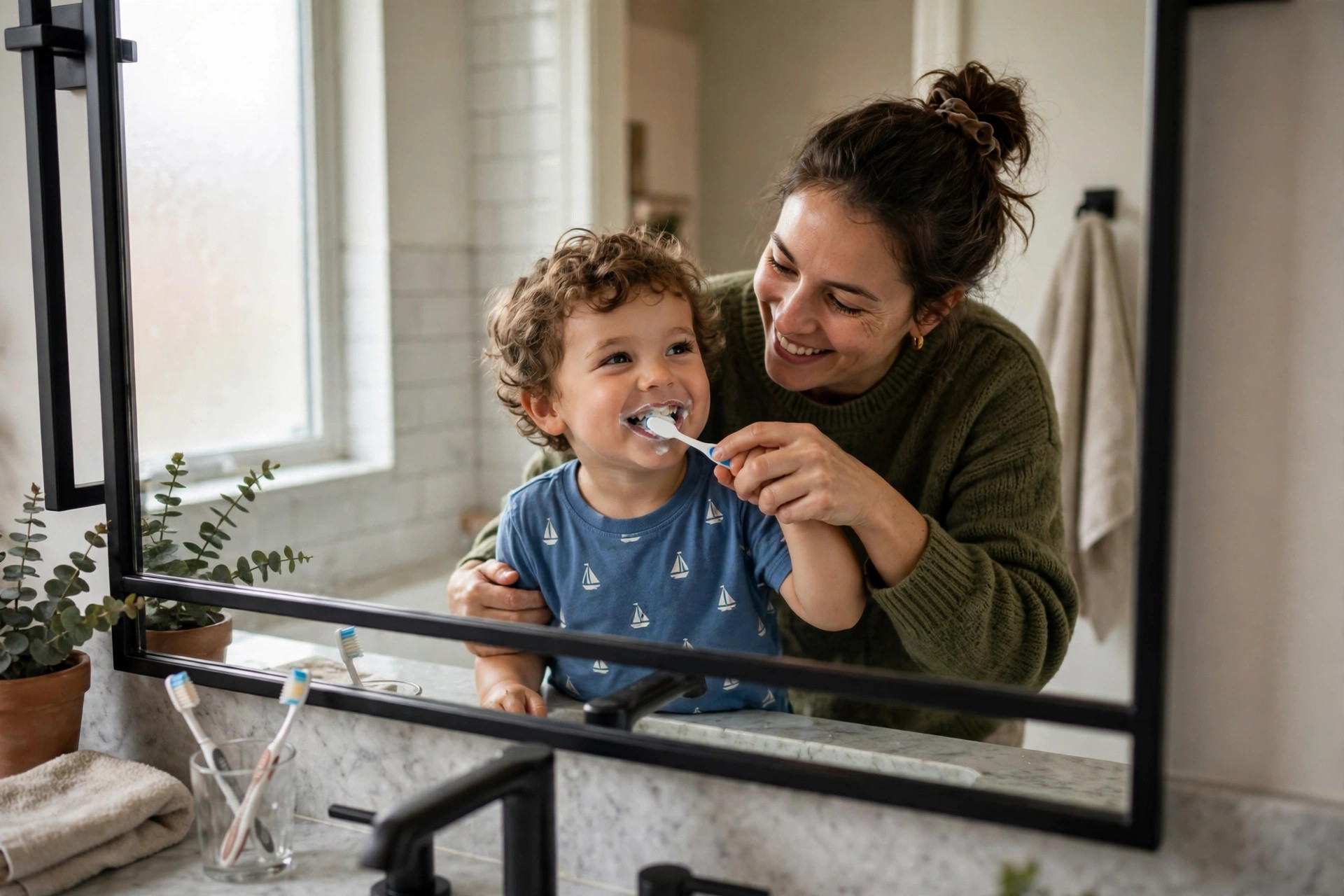
Brushing a toddler's teeth works best as a calm, short routine. Sit the child on your lap or stand behind them. Use a mirror so you can both see the teeth.
Brush twice daily, in the morning and before bed. Bedtime brushing matters most because saliva drops overnight. Keep sessions to about two minutes, or as long as cooperation allows.
Sing a short song or count teeth as you brush. Positive routines reduce resistance over time. End with praise, even if brushing was imperfect.
Positioning That Helps
For toddlers, lap positioning gives good control and comfort. Sit the child facing you, with their head supported. Gently lift the lip to see upper front teeth.
For older preschoolers, standing behind them can work well. Tilt the head back slightly for a clear view. Keep your movements slow and predictable.
If the child resists strongly, pause and comfort them. Try again later rather than forcing a distressing session. Consistency over days matters more than one perfect brush.
Step by Step Brushing Routine
Wet the brush lightly and apply the correct toothpaste amount. Brush outer surfaces first, then inner surfaces, then chewing surfaces. Use gentle circles and short strokes.
Pay attention to upper front teeth and back molars. Those areas often collect plaque and food residue. Lift lips and cheeks gently to reach all surfaces.
Encourage spitting when age appropriate. Do not encourage vigorous rinsing right after brushing. A thin fluoride residue supports enamel protection.
Making Brushing Fun Without Sugar Rewards
Use songs, timers, sticker charts, or a favourite brush. Let the child choose a brush colour or character. Avoid food rewards, especially sweets, for brushing.
Brush your own teeth alongside older toddlers sometimes. Children learn by watching trusted adults. Shared routines can turn brushing into family time.
If brushing battles persist, ask your dentist for tips. They may suggest timing, positioning, or flavour changes. Early support prevents brushing becoming a daily conflict.
Fluoride Safety and Swallowed Toothpaste
Parents often worry about fluoride safety for toddlers. The smear amount is designed to limit swallowing. Supervised brushing further reduces risk.
Occasional swallowing of a smear is generally not a cause for alarm. Repeated swallowing of large amounts deserves attention. Keep toothpaste out of reach and control dosing carefully.
Fluorosis, or white marks on adult teeth, relates to excess fluoride during tooth development. Using the correct amount reduces that risk. Your dentist can weigh local fluoride exposure, including water and other sources.
What to Do If Toothpaste Is Swallowed
If a child swallows a normal smear or pea sized amount, stay calm. Offer a small drink of water or milk, if advised by health guidance. Watch for stomach upset and contact health advice if concerned.
If a child eats a large amount of toothpaste from the tube, seek health advice promptly. Note the product, fluoride strength, and amount eaten if possible. That detail helps health professionals advise you.
Store toothpaste like a health product, not a toy. Keep it in a cupboard out of toddler reach. Teach older siblings not to give toothpaste to younger children.
Fluoride From Other Sources
Fluoride can come from water, food, supplements, and dental treatments. Your dentist considers total exposure when advising toothpaste use. Tell them about fluoride supplements or treatments.
In Toronto, municipal water fluoridation status can change over time. Ask your dentist about current local guidance for your area. That context helps tailor toothpaste advice.
Dental fluoride varnish is applied professionally in small amounts. It offers targeted protection for higher risk children. Your dentist will advise whether varnish suits your child.
Common Parent Worries
Some parents worry that fluoride toothpaste is unsafe for babies. The guidance to start early uses a tiny, controlled amount. That balance aims for protection with minimal exposure.
Other parents worry about starting too late and missing protection. Starting at the first tooth is timely for most children. If you started later, begin now and attend a dental check.
For cavity prevention context, read about preventing cavities in kids. It links brushing, diet, and visits into one practical plan.
Diet, Bottles, and Toothpaste Timing
Toothpaste works best alongside healthy diet and bottle routines. Frequent sweet drinks can overwhelm fluoride protection. Bedtime bottles with milk or juice prolong sugar contact.
Brush after the last feed before bed when possible. Avoid giving a sweet bottle after brushing. Water is the safest drink after bedtime brushing.
Offer sweet foods with meals rather than as frequent snacks. Rinse with water after sweet foods when brushing is not possible. These habits support the fluoride benefit.
Brushing After Meals and Snacks
Brush twice daily as the core routine, morning and bedtime. Extra brushing after sweet snacks is not required for most children. Overbrushing can irritate gums if pressure is high.
If a child eats acidic foods or drinks, wait a short while before brushing. Acid softens enamel temporarily. Gentle brushing after a pause is kinder to enamel.
Focus on consistency rather than perfection after every snack. Water rinsing helps between brushings. Diet timing matters more than extra brushing sessions.
Bottles, Cups, and Nighttime Care
Avoid bedtime bottles with milk, formula, or juice. If a bottle is needed for settling, use water only. Brush or wipe teeth before bed, after the last milk feed.
Transition to a cup as the child develops. Cups reduce liquid pooling around front teeth. Your dentist or paediatrician can advise on timing for your child.
For bottle decay prevention, keep bedtime bottles free of milk, formula, and juice. Brush or wipe teeth after the last milk feed before bed.
When Toothpaste Alone Is Not Enough
Toothpaste cannot offset constant sugar exposure or missed brushing. Diet, bottle habits, and visit frequency all matter. A combined plan protects teeth more reliably.
If decay signs appear despite brushing, seek dental advice promptly. White spots, brown marks, or pain need review. Early care is usually simpler and gentler.
Your dentist may suggest fluoride varnish, diet changes, or more frequent visits. Personalised plans beat generic rules for higher risk children. Ask questions until the plan feels clear.
First Dental Visit and Ongoing Care in Toronto
The first dental visit should occur by the first birthday, or within six months of the first tooth. That visit covers brushing, fluoride, diet, and tooth development. It also helps children feel comfortable in a clinic.
Bring your child toothpaste and brush to the visit if helpful. The dentist can check amount, flavour, and technique. Small adjustments at that visit prevent long term confusion.
Toronto family clinics can advise on fluoride strength and visit timing. They can also discuss sealants and fluoride treatments at later ages. Personalised guidance suits your child risk level.
What to Ask About Toothpaste
Ask how much toothpaste your child should use now. Ask which fluoride strength suits their age and risk. Ask how to handle swallowing and spitting practice.
Ask when to increase the amount to a pea sized dot. Ask whether an electric brush would help. Write down answers for caregivers who also brush the child teeth.
Share the plan with childcare staff and family members. Consistent amounts across caregivers matter. A short written note on the bathroom mirror can help.
Building a Lifelong Brushing Habit
Start early, keep routines short, and praise effort. Let children practise after parents finish brushing. Gradually hand over more responsibility as skill grows.
Supervise until brushing is thorough and consistent, often until age seven or eight. Check back teeth and gum lines during that period. Gentle reminders support independence without pressure.
For visit preparation, read about the first dental visit for toddlers. It explains what families can expect at that early appointment.
Kids Dentistry Support
Child focused dental care tailors brushing, fluoride, and diet advice. It monitors eruption, bite, and decay risk over time. It also builds positive attitudes toward dental visits.
Sealants and professional fluoride may be discussed at appropriate ages. Not every child needs the same treatments at the same time. Your dentist will base advice on examination and risk.
To find child focused care, explore kids dentistry in Toronto. A calm first visit can set the tone for years of healthy dental habits.
Conclusion: When Should Kids Use Toothpaste
When should kids use toothpaste? Start fluoride toothpaste as soon as the first tooth appears, using a tiny smear for toddlers. Increase to a pea sized amount from age three, and supervise brushing until technique is reliable.
Choose a mild child formula with the fluoride strength your dentist advises. Brush twice daily, especially before bed, and teach spitting as the child grows. Keep toothpaste stored safely and control the amount used.
With early start, correct amount, and consistent routines, toothpaste becomes a simple protective habit. Combined with healthy diet and early dental visits, it helps protect young smiles in Toronto.

Frequently Asked Questions
When should kids start using toothpaste?
Kids should start using fluoride toothpaste as soon as the first tooth appears, usually around six months. Use a tiny smear for children under three, and supervise all brushing at this age.
How much fluoride toothpaste should a toddler use?
Toddlers under three should use a smear, or rice grain sized amount, of fluoride toothpaste twice daily. Parents should brush the teeth and control the amount to limit swallowing.
What age should kids use a pea sized amount of toothpaste?
Children aged three to six should use a pea sized amount of fluoride toothpaste. Teach spitting after brushing, discourage vigorous rinsing, and supervise brushing every time.
Is fluoride toothpaste safe for toddlers?
Fluoride toothpaste is safe for toddlers when used in the correct tiny amount under supervision. Occasional swallowing of a smear is generally not alarming, but keep toothpaste out of reach.
What should I do if my child swallows toothpaste?
Stay calm if a normal smear or pea sized amount is swallowed, and seek health advice if a large amount is eaten. Note the product and amount, and store toothpaste safely out of reach afterwards.
When can kids brush their teeth alone?
Many children need supervision until around age seven or eight, when brushing becomes thorough and consistent. Check back teeth and gum lines, and keep a pea sized amount until your dentist advises otherwise.
If you are unsure about toothpaste amount, fluoride strength, or brushing technique for your child, book a child dental check. To plan that visit, see kids dentistry in Toronto and bring your child toothpaste and brush along for advice.
This article provides general information only and does not replace personalised dental or medical advice. Talk to your dentist about fluoride toothpaste amount, fluoride strength, and any concern about your child teeth.


