
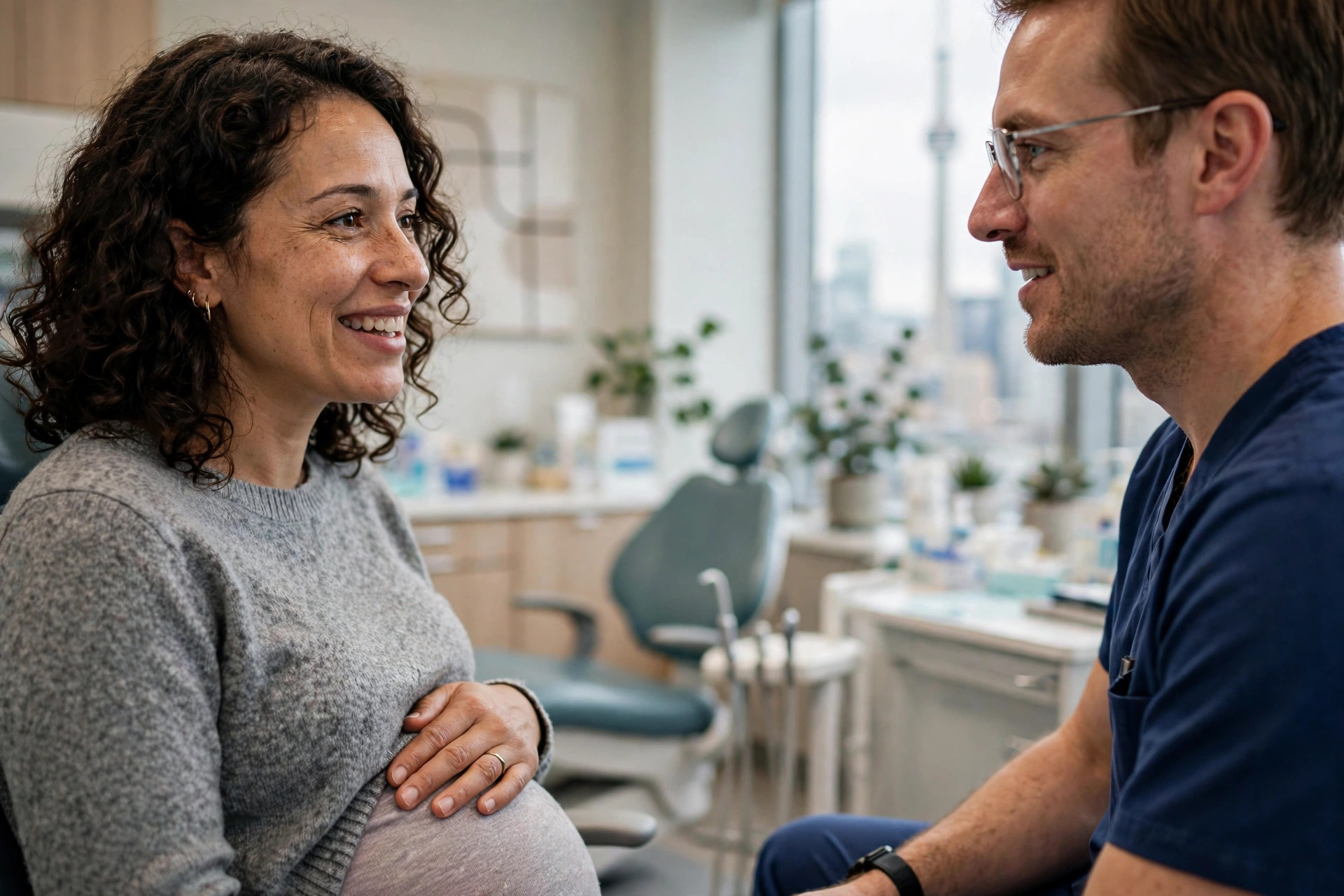
Dental care during pregnancy is generally safe, and it is important for both your health and your baby's health. Routine checkups, cleanings, and many treatments can continue while you are pregnant.
Pregnancy brings hormone changes that can affect your gums, your appetite, and your risk of tooth decay. Morning sickness, food cravings, and tiredness can also make daily oral care harder.
The safest approach is to keep up with brushing, flossing, and dental visits, and to tell your dentist that you are pregnant. That information helps the team tailor care to each trimester.
This guide explains what is safe, what needs extra care, and what to discuss with your dentist. It covers pregnancy gingivitis, X-rays, fillings, cleanings, and daily habits.
If you are pregnant and unsure about a dental visit, this guide can help you ask the right questions and feel more confident about booking care.

Dental Care During Pregnancy: The Short Answer
Yes, dental care during pregnancy is generally safe, and delaying needed care can create larger problems later. A dental infection or severe gum disease is a greater concern than routine treatment.
Routine preventive care, such as a checkup and cleaning, is usually recommended during pregnancy. Your dentist can check for gum inflammation, decay, and other issues early.
Most local anaesthetics used in dentistry are considered safe in pregnancy when used in normal doses. Your dentist will choose an option suited to your health history.
Dental X-rays, when needed, can also be taken with shielding and modern low dose techniques. Your dentist will take X-rays only when the benefit outweighs any small risk.
Elective cosmetic work, such as whitening, is often postponed until after pregnancy, not because of proven harm, but because it can wait. Urgent care should not be delayed.
The key is communication. Tell your dentist about your pregnancy, your due date, your medicines, and any advice from your prenatal care provider.
How Pregnancy Affects Your Teeth and Gums
Pregnancy hormones, especially progesterone and oestrogen, increase blood flow to the gums. That change can make gums more sensitive to plaque and more likely to swell.
Many pregnant patients notice gums that bleed more easily, feel puffy, or look redder than usual. That condition is often called pregnancy gingivitis, and it is common.
Pregnancy gingivitis does not mean you have done something wrong. It reflects a stronger gum response to plaque during pregnancy, combined with the challenges of daily care.
Morning sickness can also affect teeth, because stomach acid can soften enamel temporarily. Frequent vomiting, acid reflux, and snacking on sugary foods can add to decay risk.
Food cravings may lead to more frequent snacking, which gives bacteria more chances to produce acid. Tiredness can also make evening brushing feel harder to maintain.
Some pregnant patients develop small, non cancerous gum growths called pregnancy tumours, or pyogenic granulomas. These growths are usually painless, but they can bleed and feel uncomfortable.
Most gum changes improve after pregnancy, especially with good oral care. If bleeding, swelling, or a growth worries you, a dental visit can assess it and offer guidance.
Pregnancy Gingivitis: Signs and Care
Pregnancy gingivitis often starts with gums that bleed when you brush or floss. You may also notice redness, puffiness, or tenderness along the gumline.
Bad breath that persists despite brushing can also occur with gum inflammation. That sign alone does not prove gum disease, but it is worth mentioning at a visit.
Gentle, consistent care is the main defence against pregnancy gingivitis. Brush twice a day with fluoride toothpaste, using a soft brush and small, gentle movements.
Floss once a day, even if your gums bleed at first. Bleeding often lessens as plaque is removed and gums become healthier, but persistent bleeding should be checked.
Rinsing with water after vomiting, and waiting before brushing, can protect enamel softened by stomach acid. Your dentist can advise on timing for your situation.
A dental cleaning can remove tartar that brushing cannot remove. Tartar along the gumline can keep gums inflamed, even with good home care.
If gingivitis is left unchecked, it can progress to more serious gum disease in some cases. That progression is a reason to keep preventive visits, not to avoid them.
Your dentist can also show you how to brush and floss correctly during pregnancy, with techniques that are gentle on tender gums. Small technique changes can reduce bleeding.
What Dental Treatments Are Safe During Pregnancy?
Many routine treatments are safe during pregnancy, but timing and method may be adjusted. Your dentist will balance urgency, comfort, and safety.
Checkups and Cleanings
Checkups and cleanings are safe and recommended during pregnancy. They help catch decay, gum inflammation, and other problems early, when treatment is simpler.
A checkup and preventive visit during pregnancy usually includes an exam, gum check, and cleaning. Your dentist may also review your brushing and diet.
Tell the team if lying flat is uncomfortable, especially later in pregnancy. A small pillow, a tilted chair, or shorter visits can make care more comfortable.
If you feel nauseous during a visit, tell the team promptly. They can pause, offer water, and adjust the pace to suit you.
Fillings and Urgent Treatment
Fillings for decay are generally safe during pregnancy, and treating decay promptly can prevent pain and infection. Delaying a filling can allow decay to grow deeper.
Local anaesthetic is used to numb the area, and your dentist will choose a suitable option and dose. Tell your dentist about all medicines and health conditions.
If you have tooth pain, swelling, or infection, seek care promptly rather than waiting until after birth. Infection itself can be harmful, and treatment can usually be given safely.
Root canal treatment may also be needed if decay or infection reaches the inner tooth. Your dentist will explain the steps and whether timing can be adjusted.
Tooth extractions, when necessary, are usually possible during pregnancy, with precautions for anaesthetic, pain relief, and aftercare. Your dentist will discuss options.
Dental X-Rays During Pregnancy
Many patients worry about dental X-rays during pregnancy, and that worry is understandable. Modern dental X-rays use low doses, and shielding further reduces exposure.
X-rays are taken only when needed to diagnose a problem, such as decay between teeth or infection at a root. They are not taken routinely without a reason.
A lead apron and thyroid collar are used for protection, and digital X-rays reduce dose further. Your dentist can explain why an X-ray is needed in your case.
If an X-ray can safely wait until after pregnancy without harming your health, your dentist may postpone it. If delay could allow infection to worsen, an X-ray may be the safer choice.
You can read about whether dental X-rays are safe for general background, and discuss your specific situation with your dentist. That discussion helps you decide with confidence.
Treatments Often Postponed
Elective cosmetic treatments, such as teeth whitening, are often postponed until after pregnancy and breastfeeding. Whitening is not urgent, and research in pregnancy is limited.
Veneers, smile makeovers, and other elective work can usually wait, unless a tooth is damaged and needs protection. Your dentist can advise on timing.
Orthodontic adjustments can often continue, but major new elective plans may be deferred. Comfort, nausea, and gum sensitivity can affect those decisions.
Postponing elective work does not mean your oral health is neglected. Preventive care and urgent treatment remain priorities throughout pregnancy.
Dental Care by Trimester
Pregnancy is often divided into three trimesters, and dental care can be tailored to each stage. Your comfort and your medical advice guide timing.
First Trimester
The first trimester, roughly weeks one to thirteen, is a time when many patients feel nauseous and tired. Morning sickness can make brushing and dental visits harder.
Routine checkups and cleanings are still safe in the first trimester. If nausea is severe, your dentist may suggest a shorter visit or a later date for non urgent care.
This is a good time to tell your dentist you are pregnant, even if you are early in pregnancy. Early disclosure helps the team plan safely.
If you need urgent care in the first trimester, do not delay it. Your dentist and prenatal provider can coordinate care when needed.
Second Trimester
The second trimester, roughly weeks fourteen to twenty seven, is often the most comfortable time for dental treatment. Nausea often eases, and lying in the chair feels easier.
Many dentists prefer to schedule needed fillings or other routine treatment during this period, when comfort is better and the baby's major development is further along.
Cleanings and checkups remain important in the second trimester, especially if gum bleeding has increased. Your dentist can monitor gum health closely.
If treatment was postponed from the first trimester, the second trimester is often a good time to complete it. Discuss timing with your dentist and prenatal provider.
Third Trimester
The third trimester, roughly weeks twenty eight to birth, can bring back discomfort from lying flat and from a larger belly. Shorter visits and chair adjustments help.
Routine preventive care can continue, but long procedures may be split into shorter visits. Your dentist will prioritise comfort and safety.
Lying flat for a long time can reduce blood flow in some patients late in pregnancy. Tell the team if you feel dizzy, nauseous, or short of breath during a visit.
If you go into labour or have a pregnancy complication, inform the dental clinic promptly and reschedule. Your prenatal care takes priority in those cases.
Daily Oral Care During Pregnancy
Daily care during pregnancy follows the same basics as usual, with a few adjustments for nausea, sensitivity, and snacking. Consistency matters more than perfection.
Brush twice a day for two minutes with fluoride toothpaste and a soft brush. Use gentle pressure, especially if your gums bleed easily.
Floss once a day, or use an interdental cleaner if flossing feels difficult. Cleaning between teeth removes plaque that brushing alone misses.
If toothpaste taste triggers nausea, try a milder flavour, a smaller amount, or brushing at a time of day when nausea is less intense. Rinse well after brushing.
After vomiting, rinse your mouth with water or a fluoride mouth rinse, and wait before brushing. That wait helps protect enamel softened by acid.
Choose snacks that are kinder to teeth when you can, such as cheese, nuts, vegetables, and water. If you crave sweet foods, try to enjoy them with meals rather than grazing all day.
Drink water throughout the day, especially after snacks and meals. Water helps rinse away food particles and supports saliva flow.
If you struggle with brushing due to gagging, a smaller brush head or a different brushing position may help. Ask your dentist for tips that suit you.
Nutrition, Fluoride, and Your Baby's Teeth
Nutrition during pregnancy supports your health and your baby's developing teeth. A balanced diet with calcium, vitamin D, and other nutrients matters for both.
Dairy foods, leafy greens, and fortified foods can contribute calcium, while sunlight and diet contribute vitamin D. Your prenatal provider can advise on supplements.
Fluoride toothpaste remains recommended during pregnancy, in normal amounts. Fluoride strengthens enamel and helps prevent decay for you.
Your baby's teeth begin forming before birth, and your oral health can influence your baby's future oral health. Bacteria linked to decay can be shared through close contact.
That sharing does not mean you should avoid kissing or caring for your baby. It means good oral care for you helps reduce bacteria that could later affect your child.
After birth, avoid sharing spoons or cleaning a pacifier with your mouth, when you can. Those small habits can reduce bacterial transfer.
Your dentist can discuss fluoride treatment and sealants for your own teeth, if relevant. Those preventive options are often safe to discuss during pregnancy.
When to Seek Dental Care Promptly During Pregnancy
Some symptoms should not wait for a routine visit, even during pregnancy. Prompt care can prevent infection and reduce pain.
Seek care promptly for tooth pain that does not settle, swelling of the face or gums, or a bad taste that suggests infection. Fever with dental pain also needs prompt attention.
Bleeding gums that do not improve with gentle care, a gum growth that bleeds heavily, or a loose tooth should be checked. Those signs may need treatment.
A broken tooth, a lost filling, or trauma to the mouth should also be assessed promptly. Your dentist can advise whether urgent treatment is needed.
If you are unsure whether a symptom is urgent, call the clinic and describe it. The team can triage by phone and advise whether to come in sooner.
Emergency dental care is available for severe pain, rapid swelling, or uncontrolled bleeding, including during pregnancy. Do not delay urgent care because you are pregnant. For severe pain or rapid swelling, seek emergency dental care without delay.
Tell the team you are pregnant when you call, so they can prepare appropriately. Bring your prenatal provider's contact details if possible.
Questions to Ask Your Dentist and Prenatal Provider
Good questions help coordinate care between your dentist and your prenatal provider. Bring a short list to each visit.
Ask your dentist which treatments are safe now, and which can wait until after birth. Ask about X-rays, anaesthetics, and pain relief options for your stage of pregnancy.
Ask about gum bleeding, and whether a cleaning or more frequent checkups would help. Ask for brushing tips if nausea or gagging makes care difficult.
Ask your prenatal provider whether any dental medicine or treatment needs special consideration for your health history. Coordination is especially important if you have diabetes, high blood pressure, or other conditions.
Ask about fluoride, diet, and supplements, and how they relate to your oral health. Your providers can give advice tailored to your situation.
You can also ask about dental coverage and payment options, since cost can be a barrier during pregnancy. A clinic team can explain options in plain terms.
If you have dental anxiety, mention it early. Sedation dentistry may need extra discussion during pregnancy, and your dentist can explain what is suitable.
If anxiety is high, ask about sedation dentistry options that may suit pregnancy.

Frequently Asked Questions
Is dental work safe while pregnant?
Yes, most routine dental work is considered safe during pregnancy, including checkups, cleanings, and fillings. Tell your dentist you are pregnant, so care can be tailored to your trimester and health history.
Is it safe to have dental X-rays during pregnancy?
Dental X-rays are generally considered safe when needed, with shielding and low dose digital techniques. Your dentist will take them only when diagnosis requires it, and may postpone non urgent X-rays.
What is pregnancy gingivitis?
Pregnancy gingivitis is gum inflammation linked to hormone changes that make gums more sensitive to plaque. Signs include bleeding, redness, and puffiness, and gentle brushing, flossing, and cleaning can help.
Can I have a tooth pulled while pregnant?
Yes, tooth extractions can be done during pregnancy when necessary, with suitable anaesthetic and aftercare. Your dentist will discuss timing, pain relief, and any coordination with your prenatal provider.
Should I postpone teeth whitening until after pregnancy?
Whitening is often postponed until after pregnancy and breastfeeding, because it is elective and research in pregnancy is limited. Preventive and urgent care should not be postponed for the same reason.
How can I protect my teeth from morning sickness?
Rinse with water or fluoride rinse after vomiting, and wait before brushing to protect softened enamel. Brush gently twice a day, floss daily, and tell your dentist if vomiting is frequent.
Book Dental Care During Pregnancy in Downtown Toronto
Dental care during pregnancy is not something to fear or postpone without reason. Routine care protects your gums and teeth, and it can prevent small problems from becoming painful ones.
Pregnancy gingivitis, morning sickness, and snacking can all raise your risk of gum and tooth problems. Gentle daily care, plus regular checkups and cleanings, can keep that risk in check.
If you are pregnant and due for a checkup, or if you have bleeding gums, tooth pain, or swelling, consider booking a visit. Tell the clinic you are pregnant when you book.
A checkup and preventive visit in downtown Toronto can give you a clear plan for each trimester, plus practical tips for brushing, diet, and comfort in the chair.
You can contact us to ask about pregnancy dental care, appointment timing, and what to bring to your visit. A short conversation can ease worry and help you plan.
This article is general information only, not a diagnosis. If you have pain, swelling, fever, heavy bleeding, or a dental emergency during pregnancy, seek prompt dental care and contact your prenatal provider. See a dentist for advice about your own case.


