
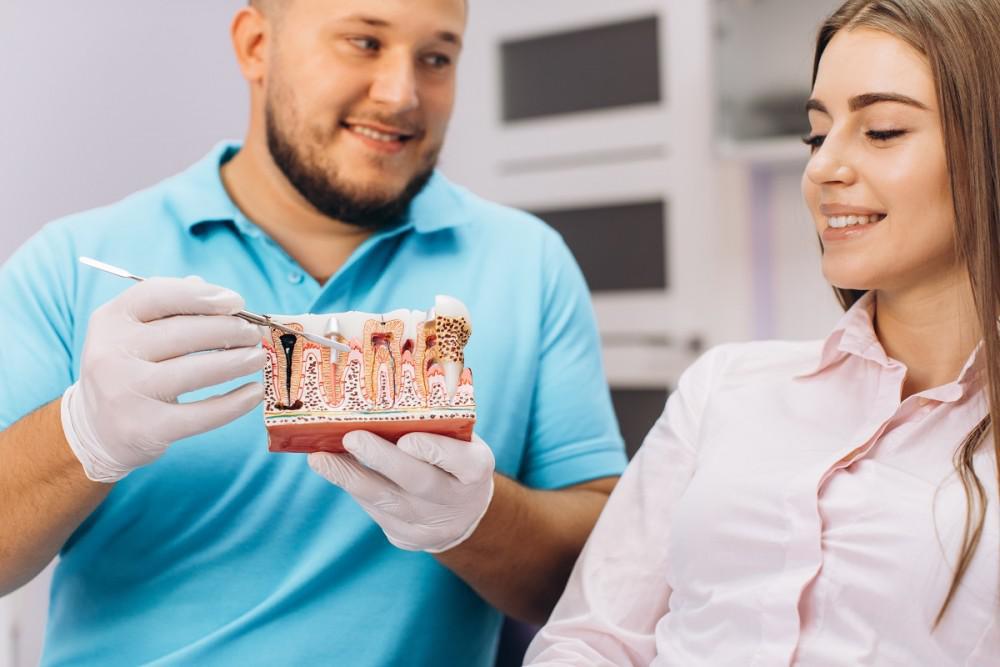
Losing a tooth changes more than your smile. It affects how you chew, how you speak, and how confident you feel in daily life. Dental implants have become the most trusted way to replace missing teeth permanently, but not everyone assumes they qualify.
The truth is that most healthy adults are good candidates for dental implants, and the few who aren’t often become eligible after a short course of preparatory care. This guide walks you through exactly what dentists look for when assessing implant candidacy, so you know where you stand before you ever sit in the chair.
Why Teeth Go Missing in the First Place
Understanding why you lost a tooth helps explain what your dentist will check before recommending implants.
Decay left untreated eventually reaches the nerve, and in some cases the only remaining option is tooth extraction.
Gum disease is another leading cause, since it slowly destroys the bone and ligament that hold teeth in place.
Trauma from sports, falls, or accidents accounts for many single-tooth losses in otherwise healthy mouths.
Whatever the cause, the site left behind is exactly what your dentist evaluates when deciding whether an implant will succeed there.
That evaluation starts with three core factors working in your favor.
What Makes Someone a Good Candidate for Dental Implants
A good implant candidate has three things working in their favor: enough healthy bone, healthy gums, and manageable overall health.
Dentists also look at habits like smoking, since tobacco use interferes with healing around the implant site.
None of these factors are fixed. Bone can be rebuilt, gum disease can be treated, and many health conditions can be stabilized before treatment begins.
The next sections break down each requirement in detail, starting with the one patients ask about most: jawbone quality.
Jawbone Density and Volume
Dental implants function like artificial tooth roots, which means they need enough bone to anchor into.
When a tooth has been missing for a long time, the surrounding bone tends to shrink through a process called resorption. This is one of the most common reasons implant candidacy gets questioned.
The encouraging news is that bone grafting has made this a solvable problem for the vast majority of patients. A bone graft rebuilds lost volume so an implant can be placed securely months later.
There are several grafting approaches, ranging from a small graft placed at the same time as extraction to a more involved sinus lift for upper back teeth.
Cone beam 3D imaging lets your dentist measure bone height and width precisely before deciding whether grafting is needed.
If your bone volume is borderline, your dentist may still proceed using shorter or angled implants rather than recommending grafting first.
Patients often ask how long grafted bone needs to heal before an implant can go in, and the honest answer is that it varies by graft size and personal healing speed.
This is exactly the kind of clinical judgment call that makes an in-person consultation so valuable, which leads to the next major factor: your gum health.
Healthy Gums and Periodontal Status
Implants are placed directly into gum and bone tissue, so active gum disease has to be treated first.
Untreated periodontitis destroys the same bone and tissue that implants depend on for stability, which is why dentists always screen for it before treatment planning.
The good news is that gum disease is highly treatable. A round of dental cleaning or deeper scaling often resolves inflammation within a few weeks.
Once your gums are stable and healthy, you become a much stronger candidate for long-term implant success.
Healthy gum tissue also matters after placement, since it forms the seal that protects the implant from bacteria for decades to come.
Patients who have struggled with recurring gum inflammation in the past are not excluded from implants; they simply need a documented period of stability before surgery is scheduled.
With gum health addressed, the conversation naturally shifts to your general medical background.
General Health Considerations
Dental implants rely on a biological process called osseointegration, where bone cells fuse directly to the implant surface.
Conditions that slow healing, such as uncontrolled diabetes, can extend this process or increase the chance of early complications.
This does not automatically disqualify you. Patients with well-managed diabetes routinely receive implants with success rates comparable to the general population.
Osteoporosis, autoimmune conditions, and a history of radiation therapy to the jaw are reviewed case by case rather than treated as automatic exclusions.
Peer-reviewed research published in a large-scale national implant dataset found an overall clinical success rate of 97.83% even among patients who required simultaneous bone grafting, which shows how far modern implant dentistry has come.
A separate registry study tracking over 158,000 implants placed across nearly a decade found an overall failure rate of only 2.21%, with most complications appearing early in the healing phase rather than years later.
That kind of data should reassure anyone worried that a medical history rules them out before they’ve even had a consultation.
Blood clotting disorders and certain blood thinning medications are also part of this conversation, since implant surgery is a minor surgical procedure.
Your dentist will typically coordinate with your physician if you take blood thinners, rather than asking you to stop medication on your own.
Smoking status is one of the few habits that meaningfully changes the picture, so it deserves its own section.
Smoking and Tobacco Use
Nicotine restricts blood flow to the gums and jawbone, slowing the healing process implants depend on.
Studies consistently show higher implant failure rates among smokers compared to non-smokers, particularly in the first year after placement.
Many dental teams ask patients to pause smoking for a defined window before and after surgery to protect the investment.
If quitting entirely feels unrealistic, even a temporary reduction around the treatment window measurably improves healing outcomes.
Vaping carries similar concerns, since nicotine itself, regardless of delivery method, is the underlying factor affecting blood flow.
Your dentist will discuss this honestly with you rather than avoid the topic, because it directly affects how long your implant will last.
Age is another area full of misconceptions, and it’s worth clearing up next.
Does Age Affect Implant Candidacy
There is no upper age limit for dental implants. Healthy bone and tissue matter far more than the number of candles on your birthday cake.
Older adults are frequently excellent candidates, especially compared to removable dentures, which can shift and affect nutrition over time.
On the younger end, dentists typically wait until jaw growth is complete, usually in the late teens, before placing implants.
This is because an implant does not move as the jaw continues developing, which can create a mismatched bite over time.
Teenagers with a missing front tooth from trauma are usually given a temporary restoration to wear until an implant becomes appropriate.
If age isn’t the limiting factor for most patients, jaw and bite alignment often shape the treatment plan instead.
Bite Alignment and Jaw Joint Health
A stable, even bite matters more for implant success than many patients realize.
Excessive grinding or clenching, sometimes tied to jaw joint issues, can place uneven pressure on a new implant.
If you have symptoms related to TMJ treatment, your dentist may recommend addressing that first or fitting a protective night guard alongside your implant.
This protects your investment and helps the implant integrate without unnecessary stress during the healing window.
Bite alignment issues are rarely disqualifying on their own, but they do influence the type of implant and restoration your dentist chooses.
With your bite considered, the next factor is simply how many teeth you’re replacing.
Single Tooth vs Multiple Missing Teeth
A single missing tooth is often the simplest implant case, since only one site needs bone evaluation and healing.
Patients missing several teeth in a row may be candidates for a bridge supported by two or more implants, reducing the total number of implants needed compared with replacing every tooth individually.
For patients missing most or all of their teeth in an arch, options like All-on-4 dental implants can replace a full arch using as few as four implants.
Your dentist will map out which configuration matches your specific bone volume, bite, and budget.
This is also where cost naturally enters the conversation, since treatment scope directly affects price.
Comparing Implants to Bridges and Dentures
It helps to understand why implants are often recommended over other replacement options, even though all three can restore function.
A dental bridge relies on neighboring teeth for support, which means those teeth need to be reshaped and can face added strain over time.
Full or partial dentures restore appearance and some chewing function but do not stop the jawbone from shrinking where teeth are missing.
Implants are the only option that replaces the tooth root itself, which is why they preserve bone and tend to last the longest of the three.
That said, bridges and dentures remain excellent choices for many patients, particularly when budget, health status, or personal preference point that way.
Understanding the Cost Factor
Cost concerns stop many people from even scheduling a consultation, but implant pricing varies enormously based on your specific case.
A single implant costs less than a full-arch solution, and financing options often bridge the gap for larger treatment plans.
Reviewing dental implants cost in Toronto before your consultation gives you realistic expectations going in.
It’s also worth checking whether your coverage applies. The Canadian Dental Care Plan has expanded access to major dental treatment for many eligible households.
Understanding the financial picture early prevents surprises later and helps you plan the treatment timeline that fits your life.
Speaking of timelines, let’s look at what the process actually involves once you’re confirmed as a candidate.
What Happens After You Qualify
Once your dentist confirms candidacy, the next step is usually a detailed scan and a personalized treatment plan.
Extraction of the damaged tooth, if one is still present, often happens in the same visit as the initial consultation.
From there, healing time before implant placement depends on whether grafting was needed and how your body responds.
Some patients qualify for same-day dental implants, which shortens the overall timeline considerably.
Others follow a more traditional staged approach, which still delivers excellent long-term results.
Either path leads to the same outcome: a stable, natural-looking replacement tooth that functions like your own.
How the Evaluation Process Actually Works
Most patients picture the candidacy decision as one quick judgment, but it actually unfolds in a series of specific checks.
Your dentist starts with a visual exam and a review of your medical history, medications, and any past dental work in the area.
Digital X-rays or a 3D scan follow, giving a precise picture of bone height, width, and the position of nerves you’ll want avoided during placement.
From there, your dentist discusses findings with you directly, walking through any preparatory steps before finalizing a treatment plan and timeline.
This transparency is intentional. You should never feel like implant candidacy is a mystery being decided somewhere behind the scenes.
Alternatives If You’re Not Yet a Candidate
If bone loss or active gum disease currently rules out implants, that status is rarely permanent.
Grafting procedures, periodontal therapy, and even a few months of improved home care can shift your candidacy significantly.
In the meantime, options like dentures or a dental bridge can restore function while you prepare for implants later.
Some patients choose to stay with these alternatives long term, and that’s a perfectly reasonable decision based on personal preference.
The most important step is simply getting an honest evaluation rather than assuming implants are off the table.
Life After Implants: Maintaining Long-Term Candidacy
Qualifying for implants is only the beginning. Keeping them healthy for decades depends on the same habits that made you a good candidate in the first place.
Regular check-ups and preventive dentistry visits let your dentist monitor the tissue around your implant for early signs of trouble.
Daily brushing and flossing around the implant matter just as much as they do for natural teeth, since gum inflammation can still develop around an implant surface.
Patients who stay consistent with home care and checkups see implants last well beyond the decade mark, in many cases for life.
Three Real-World Candidate Scenarios
Sometimes it helps to see how these factors play out in practice rather than reading about them in the abstract.
Consider a patient in their fifties who lost a molar to decay several years ago. Bone has resorbed slightly in that area, so a small graft is placed at the same time as implant surgery, adding a few months to the timeline but not changing the outcome.
Consider a younger patient who lost a front tooth playing hockey. Bone and gum tissue are both healthy, so this patient may be a candidate for a same-day approach with a temporary crown placed immediately.
Consider a patient in their seventies who has worn a full lower denture for years and wants more stability while eating. This patient is often an excellent candidate for an implant-supported denture, which snaps securely onto a small number of implants.
Each of these patients required a different plan, yet all three were, or became, good candidates for implant treatment.
Seeing these differences helps explain why a personalized consultation matters more than any general checklist.
Recovery Expectations and Why They Matter for Candidacy
Part of being ready for implants is understanding what recovery actually looks like, since your lifestyle and schedule play into the decision too.
Most patients experience mild swelling and tenderness for a few days after placement, manageable with over-the-counter pain relief.
Soft foods are recommended for the first several days while the surgical site begins to settle.
Full osseointegration, where the implant fuses solidly with bone, generally takes a few months, though you won’t be without a tooth during that time thanks to a temporary restoration.
Patients who can accommodate a short adjustment period in their routine tend to have the smoothest experience, which is worth factoring into your decision alongside the clinical criteria above.
Emotional Readiness and Realistic Expectations
Candidacy isn’t only physical. Feeling mentally prepared for a multi-step process matters too.
Patients who understand upfront that implants involve healing time tend to feel more satisfied with the results than those expecting an instant transformation.
Ask your dentist to walk through the full timeline in months, not just procedure steps, so you know what to expect week by week.
Setting realistic expectations from the start turns a good clinical outcome into a genuinely positive experience.
Questions to Ask During Your Consultation
Walking into your consultation with the right questions helps you make a confident, informed decision.
Ask how many implants your case will require and why that number was chosen over alternatives.
Ask what your bone volume looks like on imaging and whether grafting will be part of your plan.
Ask about expected healing time, maintenance requirements, and what warranty or follow-up care is included.
These questions turn a general conversation into a specific roadmap tailored to your mouth and your goals.
With that roadmap in hand, you’re ready to take the next step toward a lasting, natural-looking smile.
How Nutrition Supports Implant Healing
What you eat in the weeks around implant surgery plays a bigger role in candidacy and success than most patients expect.
Protein supports tissue repair, so dentists often encourage a diet rich in lean meats, eggs, or plant-based protein sources during recovery.
Calcium and vitamin D support the bone remodeling process that anchors your implant, and many patients benefit from simply maintaining a balanced diet rather than any special regimen.
Avoiding excessive alcohol in the days immediately following surgery helps your body focus its healing resources where they’re needed most.
None of this is complicated, but it reinforces that implant success is a partnership between the surgical work and how you care for yourself afterward.
Financing and Insurance Considerations in More Detail
Many patients delay a consultation because they assume implants are entirely out of reach financially, when the reality is more flexible than that.
Dental insurance plans vary widely in how they classify implants, with some covering a portion of the surgical placement, the crown, or both.
The Canadian Dental Care Plan has opened the door for many households who previously had no coverage at all for major restorative work.
Payment plans offered directly through your dental practice can also spread the cost of treatment across several months, making a full-arch solution more manageable.
Bringing your insurance details, or simply asking what’s realistic without insurance, to your first consultation lets your dentist build a plan around your actual budget rather than a generic price list.
Why a Personalized Consultation Beats Any Online Checklist
Reading about candidacy online is a useful starting point, but it can never replace a hands-on evaluation of your specific mouth.
Two patients with the same medical history can have completely different bone volume, gum health, or bite patterns that change their individual treatment plan.
This is why dentists resist giving a firm yes or no answer without imaging and an exam, even when a patient’s history sounds straightforward on paper.
Treat every article, including this one, as preparation for a productive conversation rather than a final verdict on your candidacy.
Moving Forward with Confidence
Most people who think they aren’t candidates for dental implants are surprised to learn how many paths exist to qualify.
Whether your case is straightforward or requires a bit of preparation first, the outcome is worth the process: a permanent, natural-feeling tooth replacement built specifically for you.
The best next step is a real conversation with a dentist who can examine your bone, gums, and health history directly.
Book a consultation with our dental implants team and find out exactly where you stand, because your smile deserves a plan built around your actual candidacy, not a guess.
Bringing It All Together
By now you can see that implant candidacy is rarely a simple yes or no. It’s a picture built from bone volume, gum health, general health, habits, and personal goals working together.
Most patients discover during their first consultation that they qualify outright, or that a short, well-defined preparatory step is all that stands between them and treatment.
That clarity alone is often a relief, replacing months of uncertainty with a concrete plan and timeline you can actually work toward.
Frequently Asked Questions
Can I get dental implants if I have diabetes?
Yes, in most cases. Well-controlled diabetes does not typically prevent implant treatment, though your dentist will monitor healing closely and may coordinate with your physician.
Do I need a bone graft to get dental implants?
Not always. Grafting is only recommended when imaging shows insufficient bone volume at the implant site to support long-term stability.
Is there an age limit for dental implants?
No. Healthy adults of any age can typically receive implants, provided bone and gum health support the procedure and jaw growth is complete.
How long does it take to become an implant candidate after gum disease treatment?
Many patients qualify within a few weeks of completing periodontal therapy and achieving stable, inflammation-free gum tissue.
Will smoking disqualify me from getting implants?
Smoking increases failure risk but rarely disqualifies you outright. Your dentist may recommend pausing tobacco use around your treatment window.
What if I’m missing all my teeth in one arch?
Full-arch solutions like All-on-4 are designed specifically for this situation and often require less bone than replacing each tooth individually.
Can I get implants right after having a tooth extracted?
Sometimes. If the socket is healthy and infection-free, some patients qualify for immediate placement, while others need a short healing period before the implant goes in.
How do I know if I need a bone graft before my consultation?
You won’t know for certain until imaging is done, but long-standing tooth loss, a history of gum disease, or previous denture wear all make grafting more likely.
If you’re ready to find out whether dental implants are right for you, our team at Heritage Dental Studio welcomes your questions and will walk you through every detail of the evaluation, so your decision feels clear, confident, and completely your own.


