A dental implant vs bridge decision usually comes down to three factors: your budget today, how long you want the solution to last, and whether you want to protect the jawbone underneath the missing tooth. Implants cost more upfront and involve a surgical step, but they typically last 20 to 30 years and stop the bone loss that follows tooth loss. Bridges are faster and cheaper initially, generally lasting 10 to 15 years, but they rely on your neighboring teeth for support.
Neither option is universally “better.” The right choice depends on your bone density, the health of your adjacent teeth, and how you weigh upfront cost against long-term value. This guide walks through every angle so you can have an informed conversation at your next appointment.
What Each Option Actually Is
Before comparing costs and lifespans, it helps to understand what you are physically getting with each treatment.
The Dental Implant
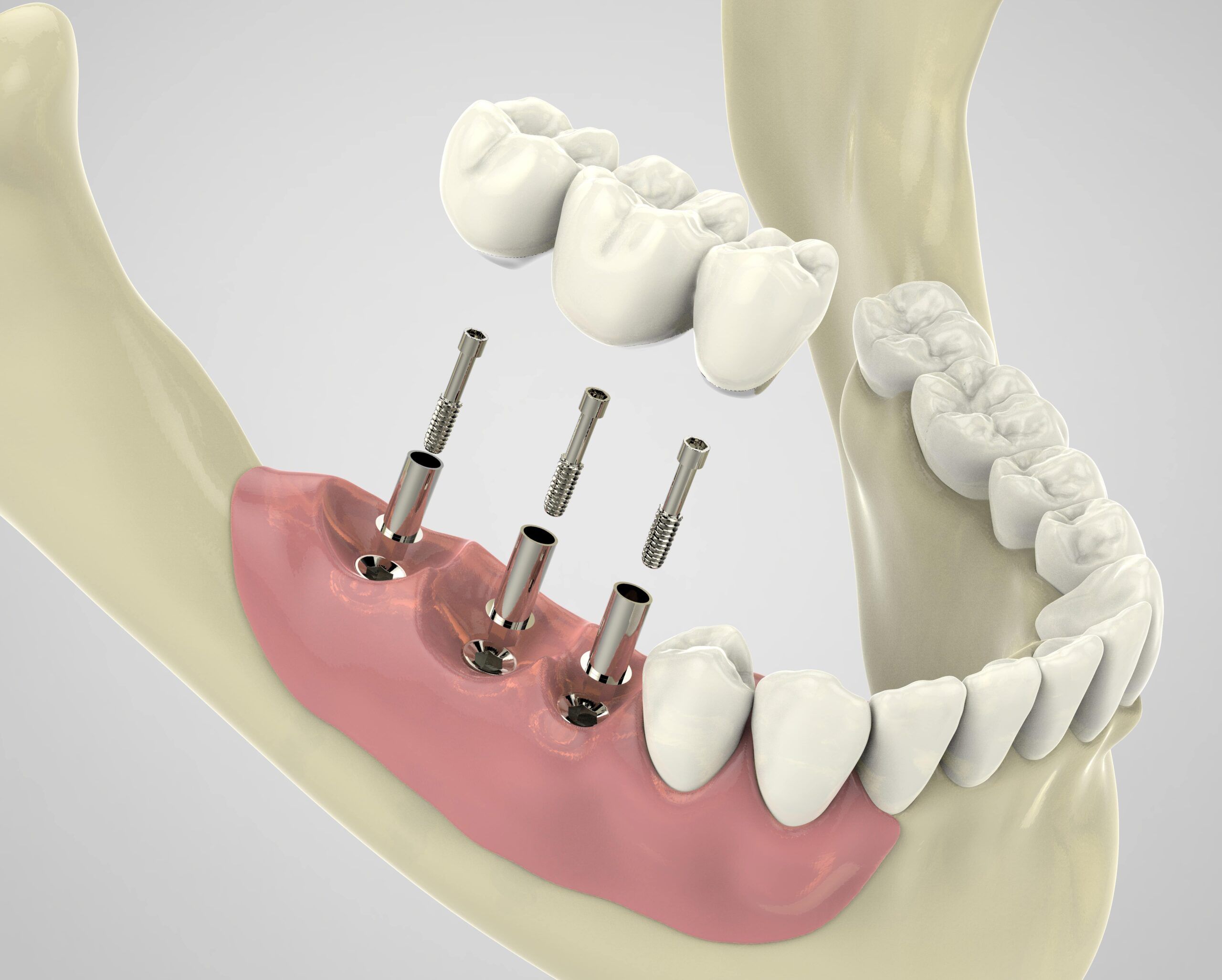
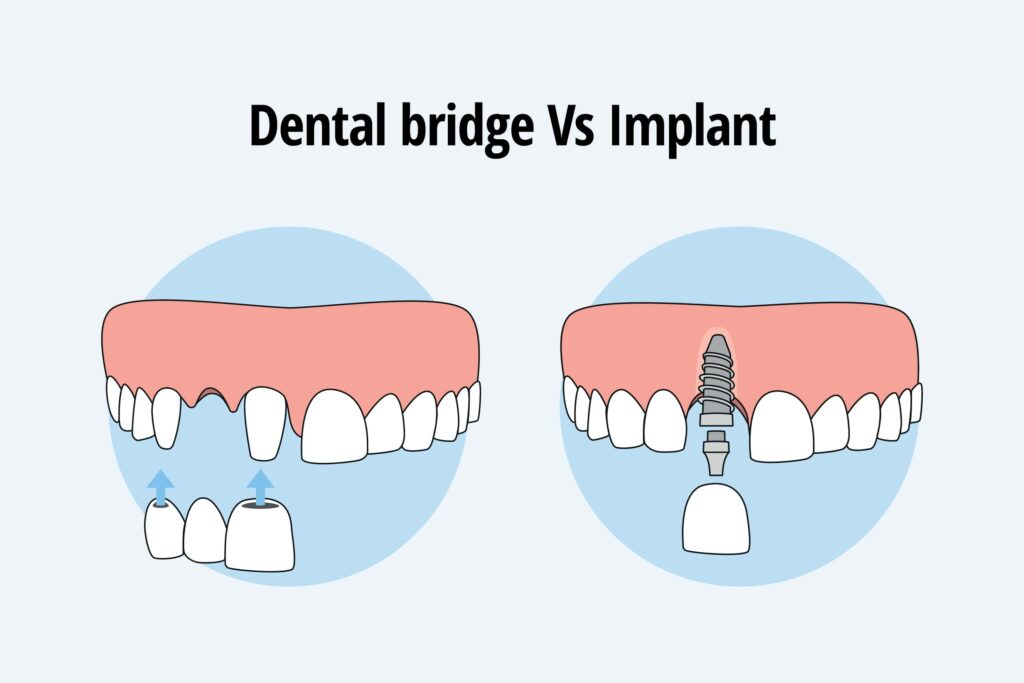
A dental implant is a titanium or zirconia post surgically placed into your jawbone, acting as an artificial tooth root. Once it fuses with the bone through a process called osseointegration, a custom crown is attached on top.
The Dental Bridge
A traditional bridge fills the gap with a false tooth, called a pontic, anchored by crowns placed on the teeth on either side. No surgery is involved, but your two neighboring teeth must be reshaped to support the crowns.
Understanding this structural difference is the key to understanding almost every other difference between the two, starting with what happens to your jawbone over time.
The Bone Health Difference
This is arguably the single biggest factor dentists weigh when discussing dental implant vs bridge with patients.
What Happens Under an Implant
Every time you chew, the implant post transfers force into the jawbone, similar to how a natural tooth root behaves. That ongoing stimulation signals your body to maintain bone density at the site indefinitely.
What Happens Under a Bridge
A bridge’s pontic sits on top of the gum without transferring any force into the bone below it. Without that stimulation, the jawbone under a bridge gradually resorbs, sometimes losing significant width within the first year.
Research on extraction sites without any tooth root replacement has found substantial horizontal bone loss within just six months, a pattern documented across multiple clinical reviews on post-extraction bone remodeling. This is one reason many dentists lean toward recommending implants when a patient’s bone quality allows for it.
Bone health is a long-term consideration, but for most patients, the conversation starts with the number on the estimate.
Comparing the Upfront Cost
Cost is often the deciding factor for patients weighing these two options side by side.
A single dental implant, including the surgical placement, abutment, and crown, typically runs from the mid three-thousands to over six thousand dollars depending on complexity and whether bone grafting is needed. A three-unit traditional bridge is generally less expensive upfront, often landing in the two-thousand to four-thousand-dollar range.
For a full Toronto-specific breakdown of implant pricing, see our guide on how much dental implants cost in Toronto. If bone grafting is part of your treatment plan, that is a separate procedure worth understanding through our page on what a bone graft involves.
The upfront number only tells part of the story, though, since these two treatments age very differently over the years that follow.
Lifespan: Where the Math Shifts
This is where many patients change their mind after seeing the full picture.
Implant Longevity
With proper hygiene and regular checkups, an implant post is designed to last 25 years or longer, and many patients keep the same implant for the rest of their life. The crown on top may eventually need replacement after 15 to 20 years due to normal wear, but the underlying implant itself typically does not.
Bridge Longevity
A traditional bridge generally lasts 10 to 15 years before it needs replacement. When it does fail, the entire bridge, not just one piece, usually needs to be redone, which means paying that original cost again.
The Long-Term Math
Over a 25-year period, a patient may pay for one implant versus potentially two full bridge replacements. When you add up the numbers, implants often work out to be similar or even lower in total lifetime cost, despite the higher starting price.
This is not true for every patient, however, since some situations make a bridge the more sensible long-term choice regardless of the math.
When a Bridge Makes More Sense
Implants are not automatically the right answer for everyone, and a good dentist will say so directly.
Insufficient Bone Density
Patients who have lost significant bone at the site, often after years of missing a tooth, may need bone grafting before an implant is even possible. This adds both cost and healing time, and some patients would rather avoid that extra step.
Medical Conditions That Rule Out Surgery
Certain conditions, including uncontrolled diabetes or a history of radiation therapy to the jaw, can affect healing after implant surgery. In these cases, a bridge avoids the surgical risk entirely.
Adjacent Teeth Already Need Crowns
If the teeth next to the gap already have large fillings or existing crowns, a bridge essentially restores those teeth at the same time as filling the gap. This can make a bridge more efficient rather than treating three separate issues.
Budget or Timeline Constraints
Implants require a healing period between placement and the final crown, often three to six months. Patients who need a faster fix, or simply cannot afford the implant process right now, may reasonably choose a bridge first.
Weighing these scenarios against the bone health and longevity benefits of implants is exactly the conversation worth having chairside with your dentist.
Comfort and Daily Care
Living with each option day to day looks a little different.
Caring for an Implant
An implant is cared for almost exactly like a natural tooth, using regular brushing and flossing. There is no special cleaning routine required beyond good general hygiene.
Caring for a Bridge
A bridge requires threading floss under the pontic daily, using either a floss threader or a water flosser. Skipping this step allows plaque to build up under the false tooth, which can damage the gum tissue and the anchor teeth over time.
Neither routine is difficult, but patients who already struggle with consistent flossing may find the implant’s simpler care routine easier to maintain long term.
Recovery and What to Expect
The treatment timelines for these two options differ significantly.
Implant Recovery Timeline
After surgical placement, most patients experience mild swelling and soreness for a few days, manageable with over-the-counter pain relief. Full osseointegration before the final crown can be attached takes three to six months, sometimes longer if bone grafting was needed.
Our step-by-step guide to the dental implant procedure walks through each stage from consultation to final crown placement.
Bridge Recovery Timeline
Since a bridge does not involve surgery, discomfort is usually limited to some tooth sensitivity after the anchor teeth are reshaped. The entire process, from preparation to final placement, is often completed within two to three visits over a few weeks.
If a fast turnaround matters more to you than long-term bone preservation, this shorter timeline is a real advantage worth weighing.
Which One Looks and Feels More Natural
Both options are designed to blend in with your surrounding teeth, but there are subtle differences worth knowing.
An implant crown sits independently in the jaw and moves with the same stability as a natural tooth root. A bridge is a connected unit, so all three crowns move together, which some patients notice slightly when biting into firmer foods.
Over many years, bone loss under a bridge’s pontic can create a small visible gap or dark line at the gumline, since the pontic no longer sits flush against a stable ridge. This is one of the more common reasons patients eventually switch from a bridge to an implant later in life.
How to Decide Between the Two
There is no universal answer, but a short checklist can help clarify your priorities.
Ask yourself whether you want to preserve the jawbone at the site for decades to come, which points toward an implant. Ask whether your neighboring teeth already need crowns anyway, which points toward a bridge as the more efficient option.
Ask how much time you have for healing, since implants require a multi-month process while bridges are completed in weeks. Finally, ask your dentist directly whether your bone density and overall health make you a strong candidate for either option, since this clinical assessment matters more than any general guideline.
Our page on who is a good candidate for dental implants covers this in more depth if you want to explore your own eligibility before booking a consultation.
A Side-by-Side Look at the Basics
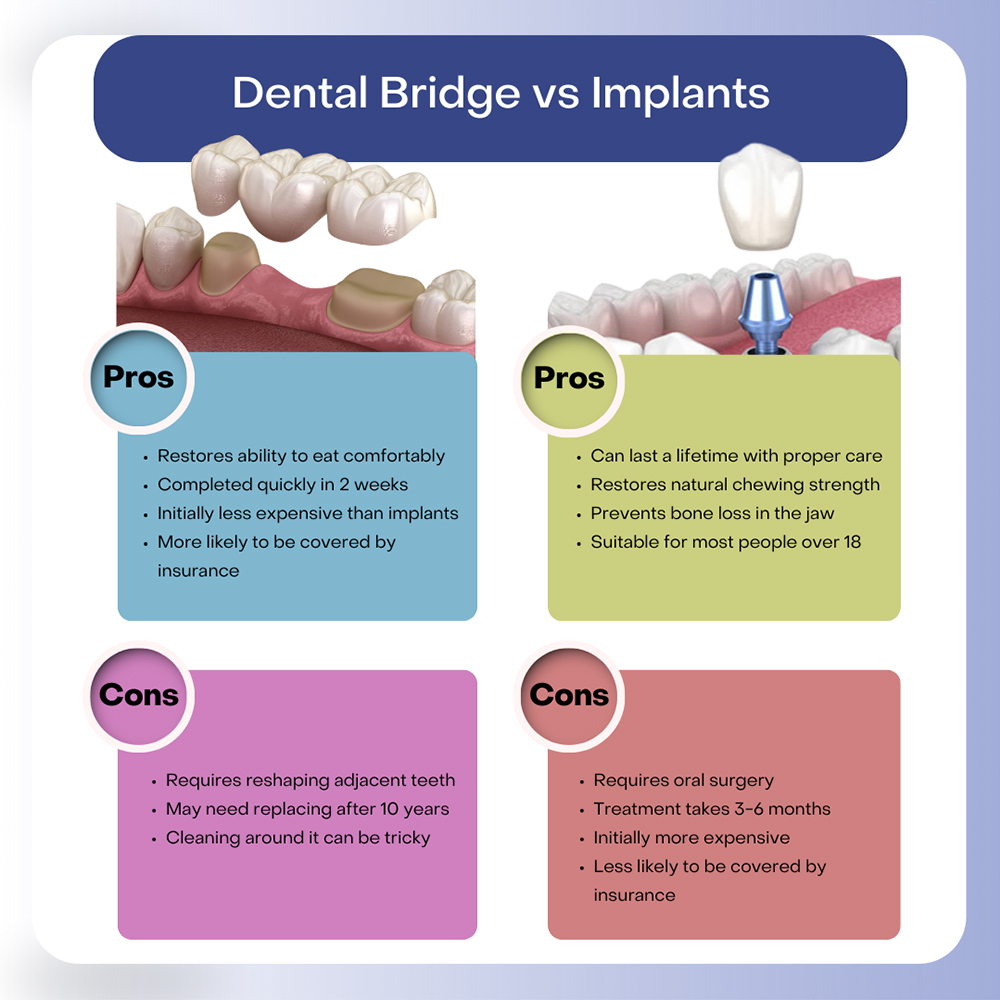
Seeing the core differences laid out together often makes the decision clearer.
Implants involve surgery and a multi-month healing process, while bridges require no surgery and are completed in a few weeks. Implants preserve jawbone density through chewing stimulation, while bridges do not stop bone resorption at the site.
Implants typically last 20 to 30 years, while bridges typically last 10 to 15 years before replacement is needed. Implants cost more upfront, while bridges cost less initially but may require a second full replacement over a patient’s lifetime.
Keeping these four comparisons in mind during your consultation helps you ask sharper questions and walk away with a decision that fits your specific situation.
How Insurance and CDCP Treat Each Option
Coverage is often the deciding factor once patients get past the clinical comparison.
CDCP and Implants
Dental implants are not currently covered under the Canadian Dental Care Plan, which means most patients pay the full cost out of pocket or through private insurance. This is an important budgeting detail to confirm before committing to implant treatment.
CDCP and Bridges
Bridges fall under major restorative services, and portions of bridge treatment may be eligible for CDCP coverage with preauthorization, depending on your income tier and the specific procedure codes involved. This coverage gap alone pushes some patients toward a bridge, even when an implant would otherwise be their first choice clinically.
Private Insurance Differences
Many private plans cover a percentage of both options under major restorative benefits, though annual maximums often apply. Checking your specific plan details before treatment begins avoids an unexpected bill after the fact.
Coverage rules shift periodically, so confirming current details directly with your insurer or through your dentist’s billing team is always worth the extra call.
Real Patient Scenarios
Seeing how this decision plays out for different situations often clarifies things more than statistics alone.
The Patient With Strong Bone and a Flexible Budget
A patient in their forties with good bone density and no urgent timeline is often the clearest case for an implant. They have the bone quality to support long-term success and enough time to complete the multi-month healing process without disruption.
The Patient With Adjacent Teeth That Already Need Crowns
If both neighboring teeth already have large old fillings or early decay, a bridge effectively treats three problems in one appointment sequence. This patient often finds a bridge to be the more efficient overall solution.
The Patient Who Needs a Fast, Temporary Fix
Someone facing a wedding, a major work event, or another firm deadline may not have three to six months to wait for implant healing. A bridge, or even a temporary partial denture, can bridge that gap while a longer-term implant plan is arranged for later.
The Patient Rebuilding After Years of a Missing Tooth
Patients who have lived with a gap for several years often have measurable bone loss at the site already. This does not rule out an implant, but it usually means a bone graft becomes part of the treatment plan, adding time and cost to the process.
Seeing your own situation reflected in one of these scenarios is often the clearest way to know which questions to bring to your consultation.
Common Myths Worth Clearing Up
A few misconceptions come up repeatedly in patient conversations about this decision.
Myth: Implants Are Always Painful
Most patients describe implant surgery discomfort as comparable to a tooth extraction, manageable with standard pain relief for a few days. It is rarely described as more painful than the anxiety leading up to the appointment itself.
Myth: A Bridge Is Always the “Safe” Choice
A bridge does carry its own risk, specifically to the two healthy teeth that get reshaped to support it. If one of those anchor teeth later develops a problem, the entire bridge may need to be redone.
Myth: You Cannot Get an Implant If You Have Lost Bone
Bone grafting has become a routine, well-established procedure that makes implants possible for many patients who would have been ruled out years ago. It adds time to the process, but it rarely eliminates the option entirely.
Clearing up these misconceptions before your consultation means you walk in ready to discuss your actual situation rather than outdated assumptions.
Success Rates Worth Knowing
Long-term outcome data helps put both options in perspective.
Pooled data from clinical reviews spanning up to twenty years of follow-up puts implant survival rates in the range of 88 to 92 percent, depending on whether the studies were prospective or retrospective in design. Bridges, while reliable in the short term, show a steeper decline in survival past the ten to fifteen year mark as anchor teeth face increased decay risk from the altered enamel surface.
Neither figure guarantees an individual outcome, since success depends heavily on your own oral hygiene, bone health, and how closely you follow your dentist’s aftercare instructions. Still, these numbers are useful context when weighing a decision that will affect your daily chewing for decades.
The Bottom Line
There is no single winner in the dental implant vs bridge debate, only the option that fits your bone health, budget, and timeline best. Implants tend to offer superior long-term value and jawbone protection, while bridges offer a faster, less invasive path when circumstances call for it.
The best next step is a clinical evaluation, including imaging of your bone density, so your dentist can tell you which option truly fits your mouth rather than relying on general averages. A confident decision today sets up decades of comfortable, functional chewing either way.
Frequently Asked Questions
Is a dental implant always more expensive than a bridge?
Upfront, yes, implants usually cost more. Over a 20 to 30 year period, however, the total cost can even out or favor implants since bridges often need full replacement at least once.
Can I get an implant if I have already lost bone at the site?
Often yes, with a bone graft first. This adds healing time and cost, but it can still make an implant viable even after years of bone loss.
Does a bridge damage the teeth next to the gap?
The anchor teeth are permanently reshaped to hold the crowns, which is a one-way change. If those teeth are already healthy, some patients prefer avoiding this alteration.
How do I know if I am a good candidate for an implant?
Your dentist will evaluate bone density through imaging, along with your gum health and any medical conditions that could affect healing, before recommending implant surgery.
Which option looks more natural over time?
Implants generally maintain their appearance longer since they preserve the bone ridge. Bridges can develop a visible gap under the pontic as bone loss progresses at the site.
Ready to Compare Your Options in Person?
If you are weighing a dental implant against a crown and bridge for your specific situation, a chairside consultation with imaging is the fastest way to get a real answer instead of a general estimate.