Tooth decay does not always announce itself with obvious pain right away. Many cavities develop quietly, which is exactly why knowing the early signs matters so much for catching them before they grow larger.
National oral health data suggests this is a widespread issue. According to Statistics Canada’s most recent Canadian Health Measures Survey, the prevalence and severity of dental caries were unchanged from 2007 to 2009 through 2022 to 2024, meaning cavities remain just as common today as they were 15 years ago.
This guide covers the seven most common signs of a cavity, what causes them, and what to do once you notice them.
Sign One: Tooth Sensitivity to Hot or Cold
Why Sensitivity Often Comes First
As decay wears through the enamel, the underlying dentin becomes more exposed, allowing temperature changes to reach the nerve more easily. This often shows up first as a brief, sharp sensation when eating something hot or drinking something cold.
How This Differs From General Sensitivity
Some people naturally have more sensitive teeth without any decay present, so it helps to notice whether the sensitivity is localized to one specific tooth. Our guide on sensitive teeth causes and relief explains the difference between general sensitivity and a symptom tied to a specific cavity.
Sensitivity is often the first sign, but a visible change on the tooth surface is frequently the next clue to look for.
Sign Two: Visible Pits, Holes, or Discoloration
What to Look For During Self-Checks
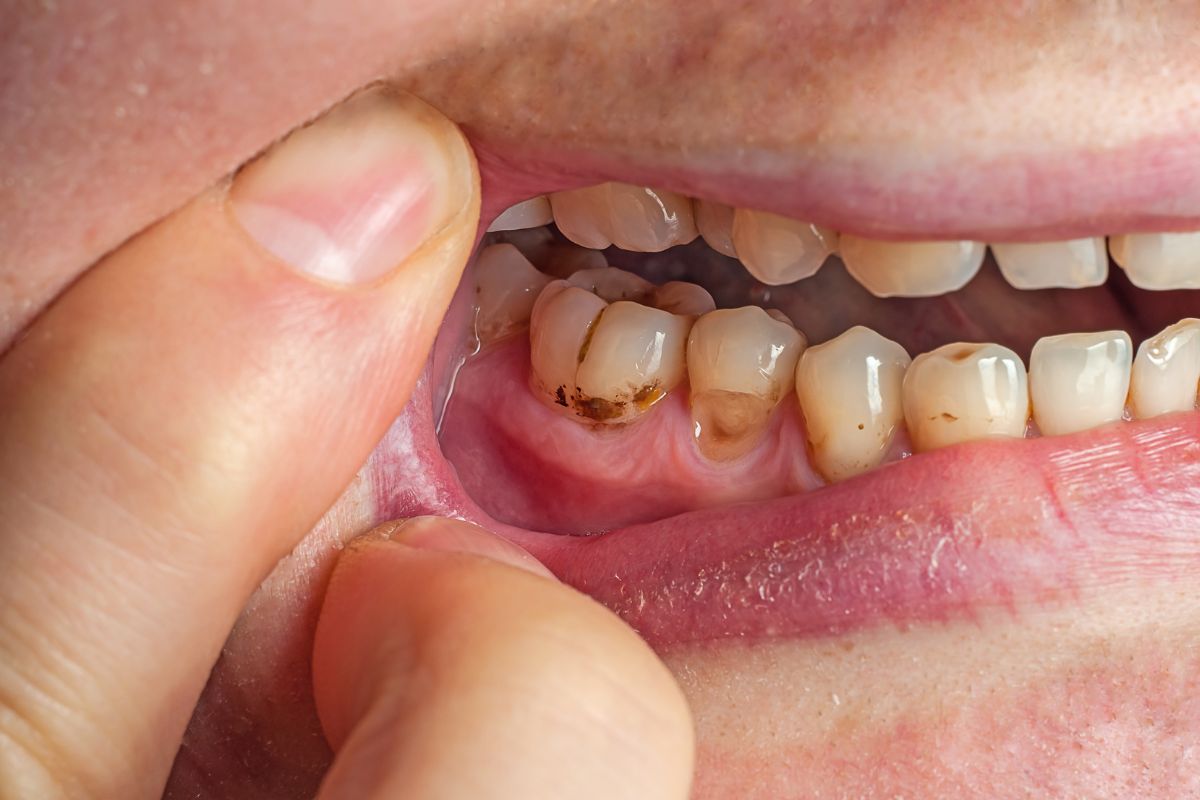
A small dark spot, a visible hole, or a rough patch on the tooth surface can all indicate decay that has already broken through the enamel. These changes are sometimes easier to spot on front teeth than on molars, where decay often hides between teeth or in deep grooves.
Why Discoloration Alone Is Worth a Closer Look
Not every stain is a cavity, but a spot that looks brown, black, or noticeably different from the surrounding tooth color is worth having examined. Our guide on why teeth turn yellow can help you distinguish surface staining from actual decay.
Visible changes are useful, but many cavities form in places you simply cannot see without professional help.
Sign Three: Pain When Biting Down
What This Symptom Usually Indicates
Pain specifically when chewing or biting down can indicate decay that has reached a point where pressure irritates the nerve inside the tooth. This differs from general sensitivity, since it is triggered by direct pressure rather than temperature.
Why This Needs Prompt Attention
Pain with biting pressure often means the cavity has progressed further than a surface-level issue, sometimes approaching the inner pulp of the tooth. Our guide on signs you need a root canal explains what happens if decay reaches this stage untreated.
Biting pain is a meaningful clue, and it often overlaps with a fourth, more constant symptom.
Sign Four: A Toothache That Does Not Go Away
Understanding the Difference Between Occasional and Persistent Pain
An occasional twinge is different from a dull, persistent ache that lingers throughout the day or worsens at night. Our guide on toothache at night relief covers why nighttime pain often feels more intense and what it might indicate.
Why Persistent Pain Should Never Be Ignored
A toothache that continues for more than a day or two usually signals decay has progressed close to or into the nerve. At this stage, waiting typically allows the problem to worsen rather than resolve on its own.
A persistent ache is one of the clearer signals, but a subtler sign involves what you notice while flossing or eating.
Sign Five: Food Getting Stuck in the Same Spot Repeatedly
Why This Pattern Is Worth Noticing
If food consistently gets trapped in the same area between two teeth, it may indicate a cavity has created a small gap or rough edge that catches debris. This pattern is easy to dismiss as a coincidence, but repeated occurrences in the same spot are worth mentioning to your dentist.
How This Connects to Decay Between Teeth
Cavities that form between teeth are often invisible during a self-check but can be detected through X-rays during a routine exam. Our page on digital X-ray technology explains how this imaging catches decay that is not visible to the naked eye.
Food trapping is a small but telling sign, and it often pairs with a visible symptom on the gum itself.
Sign Six: Swelling or Bleeding Around a Specific Tooth
What Localized Swelling Can Mean
Swelling or bleeding concentrated around one specific tooth, rather than your gums generally, can indicate that decay has progressed to affect the surrounding tissue. This is different from the more widespread bleeding associated with gum disease, which our guide on signs of gum disease covers separately.
When This Signals a More Urgent Problem
A bump on the gum near a specific tooth, along with swelling, can indicate an abscess has formed, which requires prompt treatment rather than routine care.
Localized swelling is a more serious sign, but the final symptom on this list is one that many people notice only after decay has already caused significant damage.
Sign Seven: A Cavity With No Symptoms at All
Why Some Cavities Cause No Pain
Not every cavity announces itself with pain, especially in the earliest stages when decay is limited to the outer enamel layer. This is exactly why routine exams matter, since a dentist can catch decay long before it becomes symptomatic.
The Value of Regular Checkups for Silent Decay
Our preventive dentistry exams, paired with digital X-rays, catch this kind of early decay that would otherwise go unnoticed for months or years. Our guide on whether a cavity can heal itself explains why early intervention matters even when a cavity is not yet painful.
With all seven signs in mind, it helps to understand what actually happens once a cavity is identified and treated.
What Happens Once a Cavity Is Diagnosed
Treating Early-Stage Decay
Small cavities are typically treated with a straightforward filling, restoring the tooth’s structure and function. Our guide on what to expect getting a filling walks through this common and quick procedure.
Treating More Advanced Decay
If decay has reached the inner pulp of the tooth, root canal treatment may be necessary to save the tooth from extraction. Our comparison of dental crown vs filling explains how dentists decide between these two restorative options.
Understanding the treatment path makes the earlier warning signs feel less alarming and more like useful information to act on.
Preventing Cavities Before They Start
Daily Habits That Make the Biggest Difference
Brushing twice daily with fluoride toothpaste, flossing consistently, and limiting sugary snacks all reduce your risk of developing new cavities. Our guide on how to prevent cavities covers these habits in more depth.
The Role of Fluoride and Sealants
Fluoride treatments and dental sealants add an extra layer of protection, particularly for the deep grooves in molars where decay commonly starts. Our page on fluoride treatment and sealants explains who benefits most from these preventive measures.
Prevention is always easier and less costly than treating decay after it has already progressed.
Acting on the Signs You Notice
Recognizing sensitivity, visible changes, biting pain, persistent aches, food trapping, localized swelling, or simply staying current on checkups all give you a real chance to catch cavities early. The sooner decay is identified, the simpler and less invasive the treatment tends to be.
A routine exam paired with digital X-rays remains the most reliable way to catch cavities, whether or not you are experiencing symptoms yet.
If you have noticed any of these signs, or it has been a while since your last checkup, book an exam so we can catch any decay before it progresses.
Frequently Asked Questions
Can a cavity go away without treatment?
No, a cavity does not heal on its own once decay has broken through the enamel. Early intervention with a filling is the most effective way to stop it from progressing further.
Why does my tooth hurt only sometimes?
Intermittent pain, especially triggered by temperature or pressure, often indicates early to moderate decay. It is still worth having examined even if the pain is not constant.
Is it normal to have a cavity with no pain at all?
Yes, especially in the early stages when decay is limited to the outer enamel. This is one of the main reasons routine dental exams matter, since they catch decay before symptoms appear.
How quickly does a cavity get worse?
This varies depending on the individual and the location of the decay, but untreated cavities generally continue to progress over weeks to months, eventually reaching the inner pulp if left unaddressed.
What is the difference between a filling and a crown for treating a cavity?
A filling is typically used for smaller cavities, while a crown is recommended when decay has significantly weakened the tooth structure. Our comparison of dental crown vs filling covers this decision in more detail.
Catch Decay Before It Spreads
If you have noticed any signs of a cavity, or it has simply been a while since your last visit, book an exam with our team today.