Bleeding gums after brushing might seem minor, but it is often one of the earliest signals that something is not right beneath the surface. Gum disease progresses quietly at first, which is exactly why the early signs matter so much.
Recent national data suggests gum health may be moving in the wrong direction. According to Statistics Canada’s Canadian Health Measures Survey, bleeding on probing was found in 83 percent of adults aged 20 to 79 in 2022 to 2024, an important early sign of gum inflammation.
This guide walks through the seven most common signs of gum disease, what they typically mean, and when it is time to see a dentist.
Sign One: Bleeding Gums
Why This Is Often the First Warning Sign
Gums that bleed during brushing or flossing signal active inflammation, even if you feel no pain at all. The same national survey data found the average number of teeth with bleeding among Canadian adults was seven, showing just how widespread this early symptom has become.
Why People Often Dismiss It
Many people assume bleeding is caused by brushing too hard, and while that can happen occasionally, persistent bleeding usually points to gum inflammation instead. Our guide on bleeding gums causes covers the full range of reasons this symptom appears.
Recognizing bleeding as a genuine warning sign sets you up to catch the next symptom before it becomes more serious.
Sign Two: Red or Swollen Gums
What Healthy Gums Should Look Like
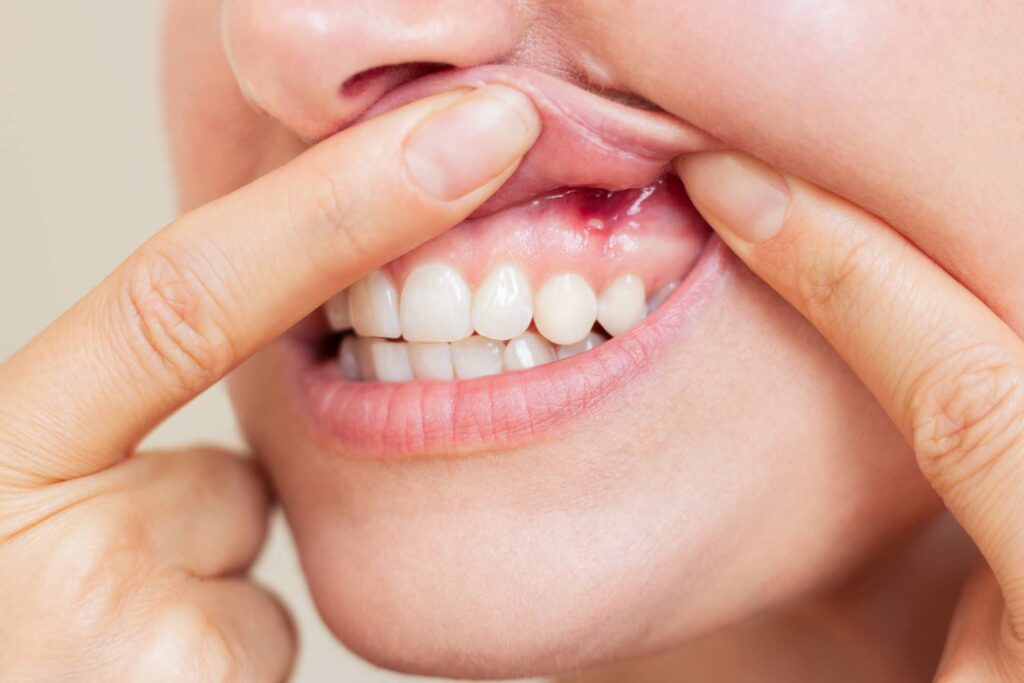
Healthy gum tissue is typically firm and a consistent pink color, without puffiness or noticeable swelling around individual teeth. Redness or swelling, particularly along the gumline, indicates the tissue is responding to bacterial buildup.
How This Differs From Temporary Irritation
Temporary irritation from a new toothbrush or a piece of food lodged near the gum usually resolves within a day or two. Persistent redness and swelling that does not improve with better brushing habits typically signals something more established.
Swelling and redness often accompany a third symptom that is harder to ignore once it starts.
Sign Three: Persistent Bad Breath
The Connection Between Bacteria and Odor
Bacteria that accumulate below the gumline release compounds that cause a persistent, unpleasant odor, even with regular brushing. Our guide on bad breath causes and treatment explains how gum disease factors into this common complaint.
Why Mouthwash Alone Does Not Solve It
Masking bad breath with mouthwash addresses the symptom temporarily but does not treat the underlying bacterial buildup causing it. If bad breath persists despite good oral hygiene, it is worth having a dentist evaluate your gum health specifically.
Bad breath is a signal worth taking seriously, especially alongside changes in how your gums actually feel around your teeth.
Sign Four: Receding Gums
How Recession Changes Your Smile Over Time
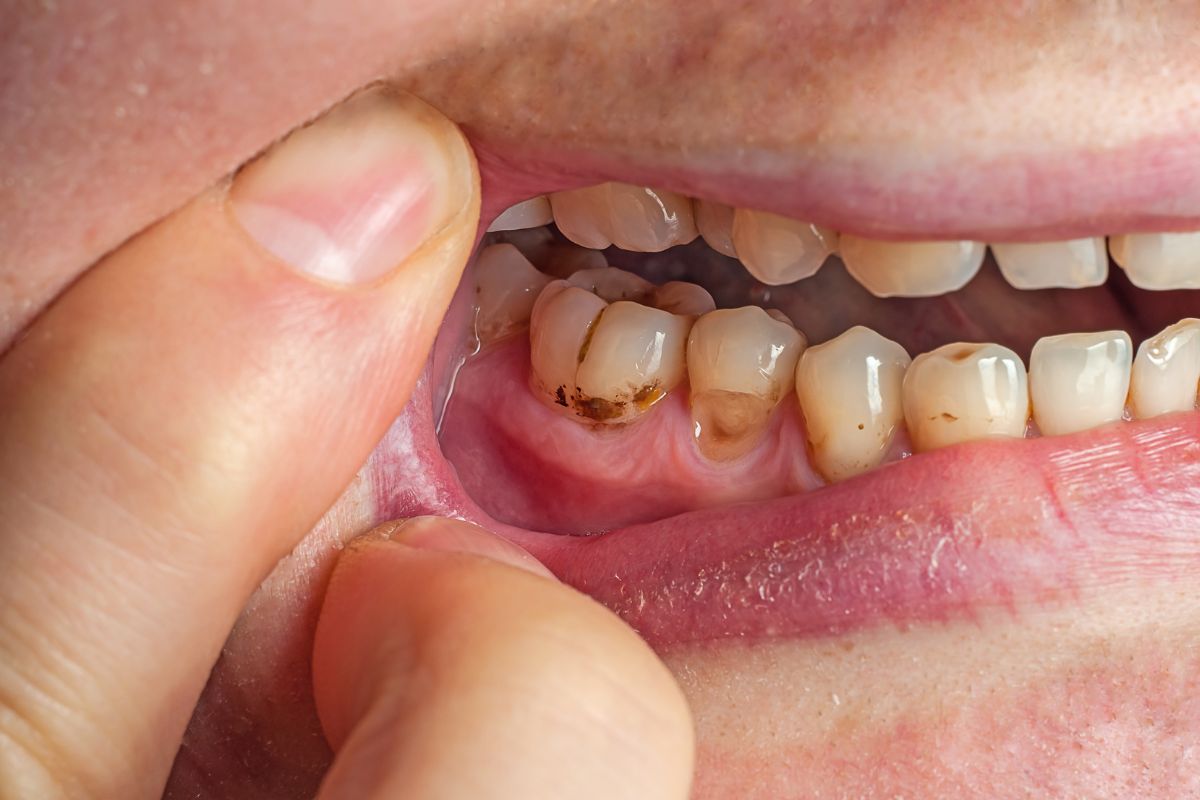
Gums that pull away from the tooth expose more of the root surface, which can make teeth appear longer than they used to. Our guide on receding gums causes covers the various factors that contribute to this pattern.
Why Recession Increases Sensitivity
As the root surface becomes exposed, teeth often become more sensitive to hot, cold, and sweet foods. Our resource on sensitive teeth causes and relief explains how gum recession contributes to this discomfort.
Recession is a structural sign, but gum disease also shows up in more subtle ways around individual teeth.
Sign Five: Deep Pockets Between Teeth and Gums
What a Pocket Actually Means
As gum disease progresses, the attachment between the gum and tooth weakens, creating a pocket where bacteria can accumulate more easily. Statistics Canada’s recent survey found the prevalence of 4mm pockets, an indicator of established gum disease, rose from 11 to 21 percent among Canadian adults over a 15-year period.
Why This Requires Professional Measurement
Pocket depth can only be accurately measured by a dentist or hygienist using a specialized probe during an exam. Our guide on scaling and root planing explains the deep cleaning treatment often recommended once pockets are identified.
Deep pockets are a sign that gum disease has moved beyond the earliest stage, which brings us to a symptom many people notice but do not connect to their gums.
Sign Six: Loose or Shifting Teeth
How Gum Disease Affects Tooth Stability
Advanced gum disease damages the bone and connective tissue that hold teeth in place, which can cause noticeable looseness or shifting over time. This is one of the more serious signs, since it suggests the disease has progressed past the gum tissue and into the supporting bone structure.
Why This Symptom Should Never Be Ignored
Loose teeth are not a normal part of aging on their own, and they typically indicate a level of gum disease that needs prompt, active treatment. Our comparison of gingivitis vs periodontitis explains how the disease progresses to this point.
Loose teeth are a late-stage sign, but there is one more symptom worth watching for that ties everything together.
Sign Seven: A Change in Your Bite
Why Your Bite Can Shift With Gum Disease
As teeth loosen or shift due to bone loss, you may notice your teeth fitting together differently than they used to when you bite down. This is a subtle sign that many people do not connect to gum health until a dentist points it out during an exam.
When to Bring This Up With Your Dentist
Mentioning any noticeable bite changes during your next visit gives your dentist important information, even if the change seems minor to you. Combined with any of the other six signs, a shifting bite adds weight to the case for a thorough periodontal evaluation.
Recognizing all seven signs together gives you a much clearer picture of your gum health than any single symptom alone.
Why Gum Disease Progresses Without Pain
The Deceptive Nature of Early Gum Disease
Unlike a cavity or a cracked tooth, early gum disease often causes little to no pain, which is exactly why so many people miss the warning signs. By the time pain or looseness appears, the disease has often already progressed to a more advanced stage.
Why Regular Exams Matter So Much
Routine preventive dental exams allow your dentist to measure pocket depth and catch early inflammation before you notice any symptoms yourself. This is one of the clearest reasons consistent dental visits matter, even when nothing feels obviously wrong.
Understanding why gum disease hides in its early stages naturally leads into what you can actually do to protect yourself.
How to Protect Your Gums Going Forward
Building a Consistent Oral Hygiene Routine
Brushing twice daily and flossing consistently removes the plaque buildup that leads to gum inflammation in the first place. Our guide on how to brush and floss correctly walks through the techniques that make the biggest difference.
Scheduling Regular Cleanings
Professional dental cleanings remove hardened tartar that brushing alone cannot address, which is one of the most effective ways to prevent gum disease from taking hold. Our guide on how often you need teeth cleaning explains the recommended schedule for most adults.
Watching for Changes Between Visits
Paying attention to bleeding, swelling, and bad breath between your regular checkups helps you catch changes early rather than waiting for your next scheduled visit. If anything feels different, it is always worth calling to ask rather than waiting it out.
With these preventive habits in place, you are in a much stronger position to keep gum disease from progressing.
Taking Gum Health Seriously
Bleeding gums, persistent bad breath, recession, deep pockets, looseness, and bite changes are all signs worth paying attention to, individually or together. Gum disease tends to progress quietly, which makes early recognition and prompt treatment especially important.
A thorough exam can measure exactly where your gum health stands and identify the right treatment before the condition advances further. Catching these signs early typically means simpler, less invasive treatment.
If you have noticed any of these signs, book a gum health evaluation so we can assess your situation and put a treatment plan in place before it progresses.
Frequently Asked Questions
Is bleeding gums always a sign of gum disease?
Not always, but persistent bleeding, especially during regular brushing or flossing, usually indicates some level of gum inflammation that is worth having evaluated by a dentist.
Can gum disease be reversed?
Early-stage gingivitis is often reversible with improved oral hygiene and professional cleaning. More advanced periodontitis, involving bone loss, can be managed but is generally not fully reversible.
How often should I get my gums checked?
Most adults benefit from a professional exam and cleaning every six months, though your dentist may recommend more frequent visits if you show early signs of gum disease.
Does gum disease affect more than just my mouth?
Research has linked gum disease to broader health concerns, including cardiovascular health. Our guide on the gum disease and heart health link explains this connection further.
What treatment is available if I already have gum disease?
Treatment ranges from professional cleaning and scaling and root planing for earlier stages to more advanced periodontal therapy for cases involving significant bone loss.
Take the First Step Toward Healthier Gums
If you have noticed bleeding, swelling, or any other signs covered here, book a gum health evaluation with our team today and get ahead of the problem.