
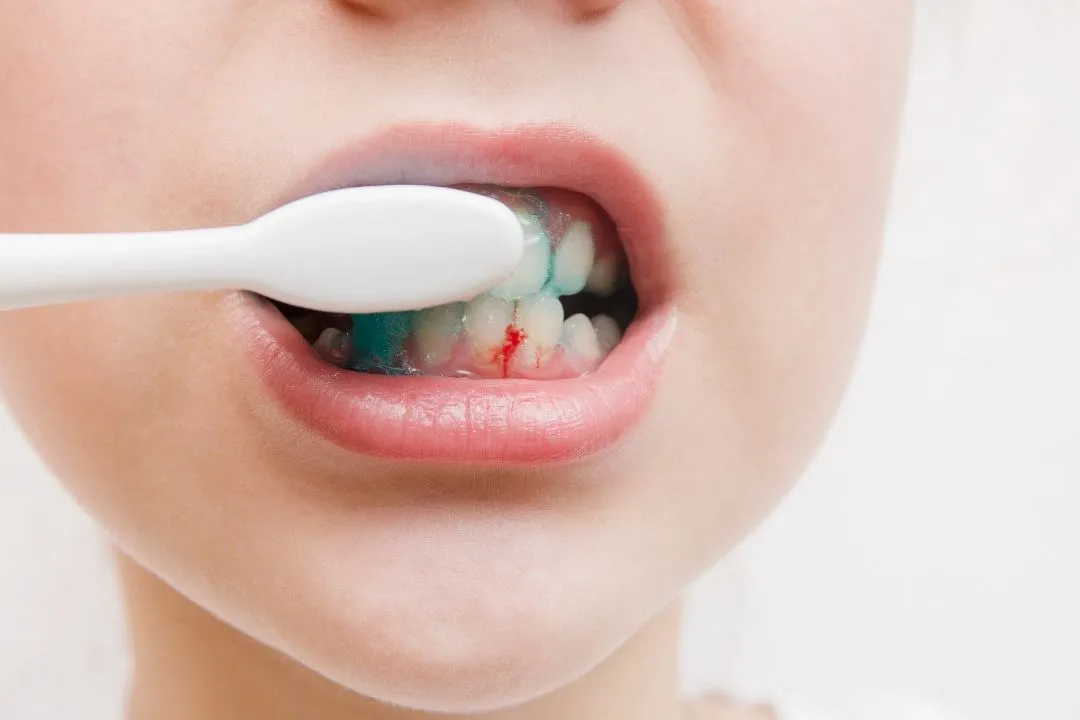
You spit after brushing and see pink in the sink. It happens again the next morning, and now you are wondering whether you should worry.
Bleeding gums are one of the most common dental complaints, and they are rarely random. They are your gums asking for attention.
This guide explains the causes of bleeding gums, offers a simple traffic-light system to judge urgency, and shows what actually stops the bleeding. You will also learn when a dental visit should not wait.
What Do Bleeding Gums Actually Mean?
Healthy gums are firm, pale pink, and do not bleed with gentle brushing or flossing. Bleeding usually signals inflammation, most often from plaque along the gumline.
Think of it like a scraped knee. Inflamed tissue is fragile, so even gentle contact can trigger bleeding.
Why Gums Bleed
Plaque is a sticky film of bacteria. When it sits against your gums, your body responds with inflammation, which increases blood flow and makes the tissue tender.
That is why bleeding often appears first at the gumline and between teeth. It is a signal, not a random event.
How Common Is Bleeding?
Very common. Statistics Canada reported that 83% of Canadian adults aged 20 to 79 showed bleeding on probing in 2022 to 2024.
In Nova Scotia, the same release noted a lower figure of 65%. Either way, bleeding is normal in the sense that it is common, but it is not healthy.
What “Bleeding on Probing” Means
Dentists use a small probe to measure the space between the tooth and gum. If a site bleeds during that gentle check, it suggests inflammation in that spot.
That measurement is one of the most reliable ways to track gum health over time.
Why You Should Not Ignore It
Early gum inflammation is reversible with good care. Left alone, it can progress to gum disease, which can damage the supporting bone.
Our guide to the signs of gum disease shows what to watch for. Next, let’s use a simple system to gauge how worried you should be.
The Traffic Light Guide to Bleeding Gums
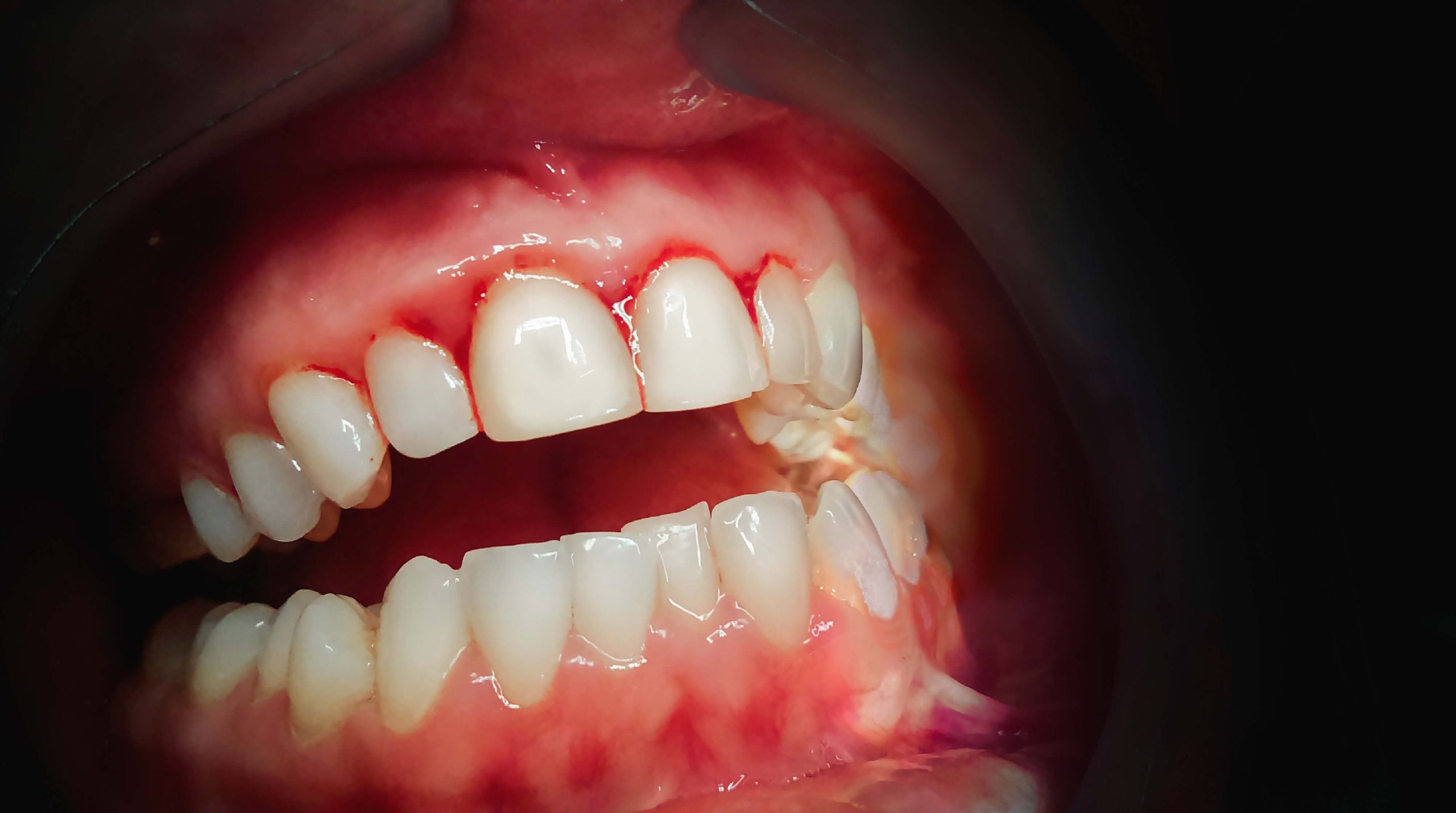
Not every pink sink needs a panic response. This traffic-light system helps you sort the situation, though it never replaces a professional exam.
Green Light: Mild and Recent
Green means light bleeding that started recently and improves within a week or two. It often follows a new brush, a flossing restart, or a busy stretch when you skipped cleaning.
- Small spots of pink when you floss
- Bleeding only in one or two areas
- No swelling, pain, or bad taste
- Improves as you clean consistently
For green-light bleeding, gentle but thorough cleaning usually helps. Book a routine visit if it does not settle.
Yellow Light: Persistent or Spreading
Yellow means bleeding that continues beyond two weeks, appears in many areas, or comes with other gum changes. It deserves a dental exam soon.
- Gums that bleed daily or with light touch
- Red, puffy, or shiny gums
- Persistent bad breath
- Gums that seem to be pulling back
Yellow-light signs often point to gingivitis or early gum disease. The earlier you treat them, the simpler the fix.
Red Light: Urgent
Red means bleeding with signs of infection or bleeding that will not stop. Do not wait.
- Bleeding that does not stop with gentle pressure after about ten minutes
- Swelling in the gum or face
- Pus or a bad taste
- Loose teeth
- Fever or feeling unwell
- Bleeding along with easy bruising elsewhere
Visit our emergency dentistry page for urgent options, and read when tooth pain is an emergency for context.
Seek medical care right away if bleeding is heavy or you have trouble breathing or swallowing.
Once you know your zone, the next step is understanding what caused it.
Common Causes of Bleeding Gums

Most bleeding gums have simple explanations, and some have more than one. Here are the most frequent causes.
Plaque and Gingivitis
Plaque buildup is the most common cause. Gingivitis is the early, reversible stage of gum disease, and bleeding is its hallmark.
Our guide to gingivitis vs periodontitis explains how the stages differ.
Hardened Tartar
Plaque that stays on teeth hardens into tartar, which you cannot brush off. Tartar irritates the gums and keeps them inflamed.
Learn the difference in our article on plaque vs tartar.
Brushing Too Hard or Using a Hard Brush
Aggressive brushing can injure gum tissue. A 2025 narrative review examined how toothbrushing relates to gum recession and tooth wear.
Use a soft brush and light pressure. Our guide to brushing and flossing correctly shows a gentle technique.
Starting or Restarting Flossing
If you have not flossed in a while, your gums may bleed for the first few days. This usually settles as inflammation decreases.
Our article on whether you need to floss explains alternatives if traditional floss is hard to use.
Hormonal Changes
Pregnancy, puberty, and other hormonal shifts can make gums more reactive. Bleeding may appear even with good hygiene.
Our guide to dental care during pregnancy explains what is common and what to discuss with your dentist.
Medications and Blood Thinners
Some medications can increase bleeding tendency. If you take blood thinners, tell your dentist so they can plan care safely.
Never stop a prescribed medication on your own. Speak with your doctor and dentist together.
Smoking and Tobacco
Tobacco use is associated with gum problems, and it can make gums look healthier than they are, so regular exams matter even more for smokers.
The JADA review on recession linked tobacco consumption and inflammation to gum recession, which shows how closely gum health and tobacco use connect.
Health Conditions Such as Diabetes
Diabetes can make gum inflammation more likely and harder to control. Our overview of diabetes and oral health explains the relationship.
Dry Mouth
Saliva helps rinse bacteria and neutralize acid. When your mouth is dry, plaque accumulates faster and gums can become more irritated.
Read about dry mouth causes and treatment if you often feel dry.
Poorly Fitting Dental Work or Appliances
Ill-fitting dentures, rough crowns, or appliances can rub the gums. If bleeding is limited to one area, ask your dentist to check the fit.
Our guide on how to care for dentures has helpful tips.
Stress and Poor Sleep
Stress can weaken your body’s ability to manage inflammation, and it often disrupts routines. Our article on stress and oral health explains why.
Now let’s answer the practical questions people ask most when bleeding happens.
Bleeding Gums When Brushing or Flossing: Quick Answers
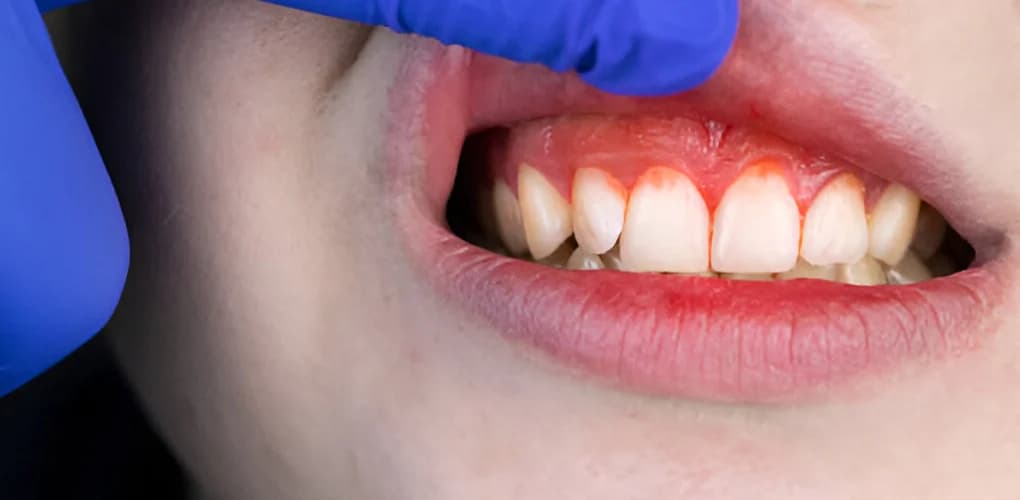
These are the questions we hear most in the chair. The answers can save you a lot of worry.
Why Do My Gums Bleed When I Floss?
Most often because plaque has inflamed the tissue between your teeth. Flossing disturbs that plaque and the fragile tissue bleeds.
If you floss gently every day, bleeding usually decreases within one to two weeks as inflammation settles.
Should I Stop Brushing or Flossing?
No. Stopping lets plaque build up and makes inflammation worse. Keep cleaning gently and consistently.
Use a soft brush, light pressure, and a careful technique. If it hurts or bleeds heavily, call your dentist.
How Long Until the Bleeding Stops?
With better cleaning, many people see improvement within a week or two. If bleeding continues past two weeks, book an exam.
Persistent bleeding may point to tartar or gum disease that needs professional care.
Why Does Only One Spot Bleed?
Localized bleeding often points to a trapped food particle, a rough filling edge, or a pocket around one tooth. It can also relate to a local plaque trap.
A dentist can find the cause quickly and fix it.
Do Bleeding Gums Mean I Have Gum Disease?
Not always, but they can. Bleeding is an early sign that gums are inflamed, and a dentist can tell whether it is gingivitis or something more advanced.
Bleeding alone does not diagnose anything, which is why an exam matters.
The next question is what happens when bleeding is a sign of something more serious.
Bleeding Gums and Gum Disease: When to Worry
Gum disease exists on a spectrum. Bleeding is often the first sign, and early action changes the outcome.
Gingivitis: The Reversible Stage
Gingivitis involves inflammation without bone loss. With good home care and a professional cleaning, it can often be reversed.
This is the best time to act because the fix is usually simple and comfortable.
Periodontitis: When Support Is Lost
Periodontitis involves loss of the bone and tissue that hold teeth in place. It can cause gum recession, deeper pockets, and loose teeth.
Pocket depth is one way to measure it. Trade coverage of Canadian survey data reported that adults with shallow 0 to 2 mm pockets fell from 45% to 13% between 2007 to 2009 and 2022 to 2024.
What the Latest Canadian Data Shows
The same coverage noted that 4 mm pockets rose from 11% to 21%, and 5 mm pockets rose from 5% to 9%. Two-thirds of adults still fall in the generally healthy 0 to 3 mm range.
Those numbers show why gum health deserves attention across Canada, not just in people with obvious problems.
Warning Signs Beyond Bleeding
- Persistent bad breath or a bad taste
- Gums pulling away from teeth
- Loose or shifting teeth
- Pain when chewing
- Pus between the teeth and gums
Learn more about receding gums causes and bad breath causes and treatment if these sound familiar.
Whole-Body Connections
Gum inflammation is linked with other health issues. Our overview of the gum disease and heart health link explains why dentists take it seriously.
If you have concerns about your gums, the sooner you get an exam, the more options you keep. Let’s look at what treatment involves.
Bleeding Gums Treatment: What Actually Helps
Treatment depends on the cause. For most people, it starts with improved daily cleaning and a professional cleaning.
Better Plaque Control at Home
Consistent brushing and cleaning between teeth are the foundation. Bleeding usually fades as plaque is removed.
A national survey analysis reported in 2026 found that following recommended self-care, including brushing twice daily and annual check-ups, was associated with better self-reported oral health.
Consider an Electric Toothbrush
A Cochrane review found that powered toothbrushes reduced gingivitis by 6% in the short term and 11% in the long term compared with manual brushes.
The authors noted that the clinical importance was unclear. Our comparison of electric vs manual toothbrushes helps you decide.
Professional Cleaning
A dental cleaning removes tartar that home care cannot. It is often the single most effective step for reversing gingivitis.
Learn more about our dental cleaning service, and read how often you should get teeth cleaned.
Deep Cleaning for Gum Disease
When pockets are deeper, your dentist may recommend scaling and root planing. It cleans below the gumline and smooths root surfaces.
Our guide to scaling and root planing explains the process and recovery.
Treat Underlying Conditions
If diabetes, medications, or dry mouth contribute, your care plan should include them. Coordinated care with your doctor may be needed.
Reduce or Quit Tobacco
Quitting tobacco can improve gum healing and make bleeding a more reliable signal. Your dentist can support you with resources.
Fix Local Irritants
Rough fillings, ill-fitting appliances, or crowded teeth can trap plaque. Correcting them can resolve stubborn bleeding in one area.
Treatment works best with a simple routine, so here is a two-week plan.
Your Two-Week Plan for Bleeding Gums
If you have green-light bleeding, try this plan. If you have yellow or red signs, book a dental visit first.
Days 1 to 3: Reset Your Routine
Switch to a soft brush and brush gently for two minutes, twice a day. Clean between your teeth once daily.
Expect slight bleeding at first. That is normal when inflamed tissue is disturbed.
Days 4 to 7: Stay Consistent
Keep the same routine, and do not skip evenings. Sugary snacks feed plaque, so limit frequent snacking.
Our guide to how sugar affects teeth explains why it matters.
Days 8 to 14: Check Your Progress
Bleeding should be noticeably less. Gums may look firmer and pinker.
If bleeding continues, book an exam. A professional cleaning may be all you need.
After Two Weeks: Make It a Habit
Keep your routine and schedule your next cleaning. Prevention is easier than treatment.
Our list of the best foods for healthy teeth can support your efforts.
Some situations need a slightly different approach, so let’s cover them.
Bleeding Gums in Special Situations
Not everyone’s gums behave the same way. These situations deserve a little extra attention.
During Pregnancy
Gums often become more sensitive and bleed more easily. Keep up gentle cleaning and see your dentist.
Read our article on dental care during pregnancy for safe options.
If You Take Blood Thinners
Tell your dentist about all medications. They can time treatment and use techniques that control bleeding.
Do not adjust medications without medical advice.
If You Wear Dentures
Gums under dentures can become sore and inflamed. Good cleaning of both the denture and gums helps.
See our guides on how to care for dentures and adjusting to new dentures.
If You Are Older
Gum problems are common with age, and mobility issues can make cleaning harder. Our guide to dental care for seniors offers practical tips.
If Your Child’s Gums Bleed
Children can develop gum inflammation too. Gentle brushing and regular checkups help.
Our article on when kids start toothpaste covers early habits.
Once you know what to expect at home, it is worth knowing what happens at the dental office.
What Your Dentist Will Do
A gum exam is quick and comfortable for most people. Knowing the steps takes away the mystery.
The Exam and Probing
Your dentist will look at your gums, measure pocket depth, and note where bleeding occurs. Those measurements form your baseline.
X-Rays
X-rays show bone levels and hidden problems. Our digital X-rays provide clear images, and our article on whether dental X-rays are safe answers common questions.
A Clear Plan
You should leave with a diagnosis, treatment options, and an estimate. Our guide to what happens at a dental checkup walks through the process.
Follow-Up
Gum care is ongoing. Your dentist will recommend a cleaning schedule based on your needs.
Before we talk about cost, it helps to see how gum health looks across Canada right now.
What the Data Says About Gum Health in Canada
Personal experience is useful, but national numbers show the bigger picture. Recent Canadian survey releases paint a clear story.
The Bleeding Numbers
The 2022 to 2024 Canadian Health Measures Survey found that 83% of adults aged 20 to 79 showed bleeding on probing, and the release reported an average pocket depth of 5 mm.
That release also highlighted that the Nova Scotia figure was lower, at 65%. Regional differences exist, but the overall message is that gum inflammation is widespread.
Deeper Pockets Are Becoming More Common
Trade coverage of the survey reported that gum health has worsened since 2007 to 2009, with 3 mm pockets rising from 34% to 51%.
The same coverage noted that 5 mm pockets nearly doubled, from 5% to 9%. Deeper pockets are harder to clean at home, which is why professional care becomes important.
Self-Rated Oral Health
A 2026 Health Reports analysis using the 2023/2024 Canadian Oral Health Survey found that 17.1% of adults rated their oral health as fair or poor.
The same analysis reported higher risk among men, people from lower-income households, and people with lower general health status.
What This Means for You
If you have bleeding gums, you are in the majority, but the numbers also show the trend is not improving on its own. Good daily habits and regular professional care are the most reliable levers you control.
Speaking of tools, many people ask whether upgrading their toothbrush helps with bleeding.
What the Research Says About Toothbrushes and Gum Bleeding
The toothbrush question comes up in almost every gum conversation. The best evidence comes from a large Cochrane review.
Plaque and Gingivitis Results
The Cochrane review pooled dozens of trials on plaque and gingivitis. For gingivitis, it found benefits for powered brushes in both the short term (44 trials, 3,345 participants) and the long term (16 trials, 1,645 participants).
In practical terms, the review reported an 11% plaque reduction at one to three months and 21% after three months, along with 6% and 11% reductions in gingivitis.
How to Read Those Numbers
The authors noted that the clinical importance of these differences remains unclear. Results also varied a lot between trials.
That means an electric brush may help some people, but technique and consistency still matter more than the tool.
Technique Still Wins
A 2025 review on brushing and gum health examined how toothbrushing relates to recession and tooth wear, which is a reminder that pressure and technique are part of the story.
Whether you choose electric or manual, light pressure and a soft brush protect fragile gums.
Choosing What Works for You
Pick a brush you will use twice a day, every day. If mobility or motivation is a challenge, a powered brush with a timer can be helpful.
Our comparison of electric vs manual toothbrushes walks through the pros and cons.
A Quick Self-Check for Bleeding Gums
Use this checklist once a week for a month. Track your answers to see whether things are improving.
- Do my gums bleed when I brush or floss?
- Are any areas red, puffy, or shiny?
- Do I notice bad breath that does not go away?
- Do any teeth feel loose or look longer?
- Have I cleaned between my teeth most days this week?
- Am I using a soft brush and light pressure?
How to Use Your Answers
If bleeding decreases and gums look firmer, you are on the right track. If not, book an exam.
Bring your notes to your appointment. They make it easier for your dentist to see patterns and tailor advice.
Once you have a self-check habit, the next step is planning the practical side of care.
Costs and Coverage
Treating gums early is usually more affordable than treating advanced disease. Planning ahead makes it easier.
Ask for an Estimate
Ask for a written plan with costs and timing. Our pricing and fees page explains how we approach estimates.
Understand Your Benefits
Read our guide to direct billing and our insurance and payment page. Our overview of dental cleaning costs in Toronto provides context.
If budget is tight, see our guide to affordable dental care in Toronto.
Before we wrap up, a few myths deserve a quick correction.
Common Myths About Bleeding Gums
Myths keep people from acting. Here are the ones that cause the most harm.
Myth: Bleeding Means Stop Flossing
Stopping lets plaque accumulate and prolongs bleeding. Clean gently and consistently instead.
Myth: Bleeding Is Normal
It is common, but it is not a sign of healthy gums. Healthy gums typically do not bleed with gentle care.
Myth: Only Older Adults Get Gum Problems
Gum inflammation can affect any age. National data on adults aged 20 to 79 showed widespread bleeding.
Myth: Mouthwash Alone Fixes It
Rinses may help freshen breath or reduce bacteria, but they do not remove plaque. Mechanical cleaning is essential.
Myth: If It Does Not Hurt, It Is Fine
Gum disease is often painless in early stages. That is why bleeding is such an important signal.
Do Not Ignore Bleeding Gums
Bleeding gums usually mean inflammation from plaque, and they are often reversible with better cleaning and a professional visit. The traffic-light system helps you judge urgency, but an exam gives the real answer.
Clean gently and consistently, switch to a soft brush, and book a cleaning if bleeding lasts beyond two weeks. Seek urgent care for swelling, pus, loose teeth, or bleeding that will not stop.
Your gums are asking for help, and the fix is usually simpler than you expect. Book your visit today, and give your smile the strong foundation it deserves.
FAQ
Why do my gums bleed when I brush?
Most often, plaque has inflamed the gums, making them fragile. Brushing gently and cleaning between teeth usually reduces bleeding within one to two weeks. If it continues, book a dental exam.
When should I worry about bleeding gums?
Worry if bleeding lasts beyond two weeks, spreads across your mouth, or comes with swelling, pus, loose teeth, or bad breath. Bleeding that will not stop needs urgent care.
Can bleeding gums heal on their own?
Early inflammation can improve with consistent home care. If tartar is present or gum disease has developed, professional cleaning is usually required. Our guide to the signs of gum disease helps.
Do bleeding gums mean gum disease?
Not always, but they are an early warning. A dentist can confirm whether it is gingivitis or periodontitis by measuring pockets and checking bone levels with X-rays.
Is an electric toothbrush better for bleeding gums?
A Cochrane review found modest reductions in plaque and gingivitis with powered brushes. Technique matters most, so use light pressure with either type.
Ready for Healthier Gums?
A short visit can tell you whether your bleeding is a minor blip or an early warning. You will leave with a clear plan.
Book an appointment at Heritage Dental Studio in downtown Toronto, and meet Dr. Roz Kamran and our team for a gentle, thorough gum assessment.


